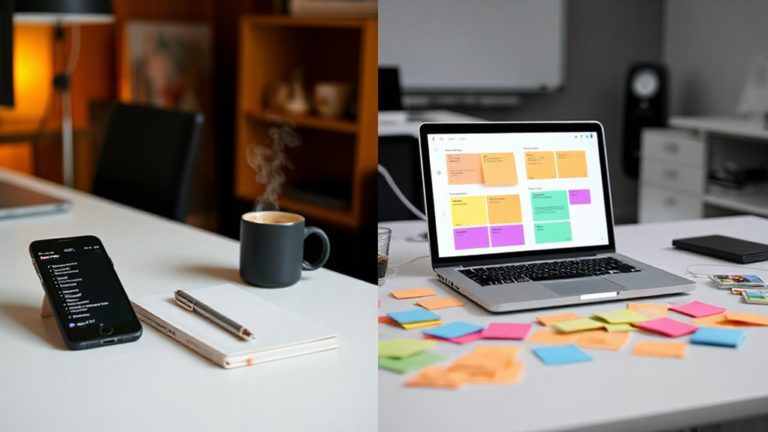
How can professionals regain command of their workday when the average employee achieves only 2 hours and 53 minutes of productive work during an 8-hour shift? The answer lies in understanding the root causes of this productivity crisis and implementing strategic solutions that address modern workplace challenges.
Interruptions strike roughly every three minutes, requiring 23 minutes to regain full focus afterward. Social media leads workplace distractions at 47%, followed closely by news websites at 45%, while non-work conversations consume 38% of attention. This constant fragmentation explains why focus efficiency has declined from 65% to 62% in recent years, creating an overwhelming sense that workdays have become impossible to manage.
The modern workplace delivers interruptions every three minutes, shattering focus and leaving professionals scrambling to reclaim control of their fractured workdays.
Technology presents both solutions and complications. Generative AI boosts user performance by 66%, with desk workers using AI reporting 90% higher likelihood of increased productivity. Automating routine tasks saves employees an average of 3.6 hours weekly, yet 77% of workers also report that AI sometimes decreases productivity due to poor integration or increased workloads. The key lies in intentional implementation rather than blind adoption. Without careful AI management, longer workdays and reduced focus time are observed, leading to decreased overall effectiveness.
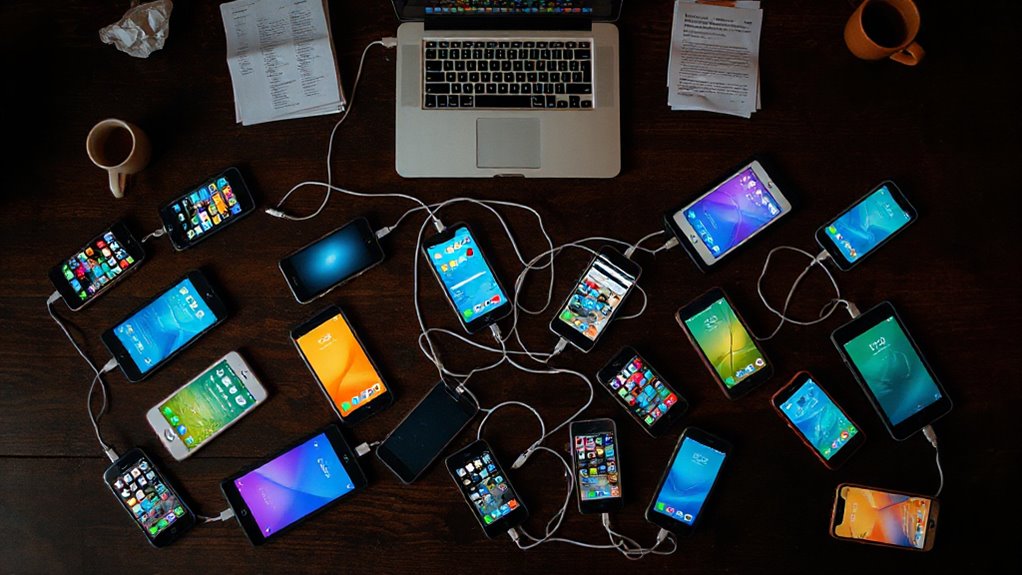
System fragmentation compounds these challenges profoundly. Half of businesses operate with 17 disconnected digital tools, while only 4% maintain fully integrated platforms. This technological chaos forces 37% of companies to employ 11 or more full-time staff just to reconcile data across fragmented systems, creating operational complexity that hampers control.
Remote work offers promising solutions. Remote-only workers gain approximately 29 extra productive minutes daily compared to hybrid and in-office employees. Overall productivity has improved 2.1% above pre-pandemic levels, largely due to flexible work arrangements that reduce commuting stress and office distractions. Eliminating commutes adds over 120 hours of productive time annually per employee.
Employee engagement remains fundamental to productivity control. With only 21% of global employees engaged at work, organizations lose $438 billion annually to low productivity. Engaged teams demonstrate 78% less absenteeism and 14% higher productivity rates.
Hybrid models achieving two remote days weekly maintain productivity levels comparable to office work while reducing quit rates by 33%, suggesting that strategic flexibility enhances both engagement and output when properly managed.