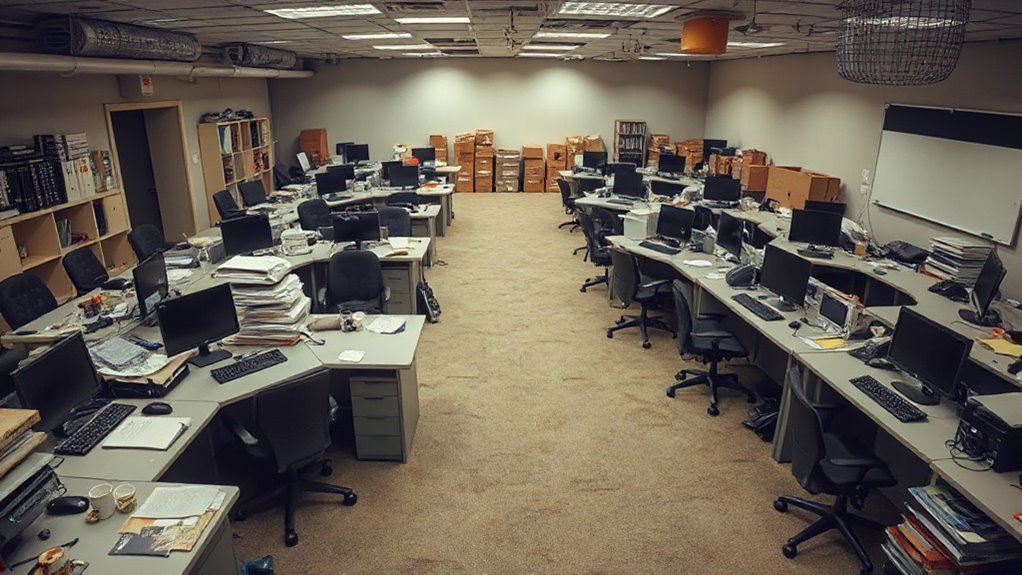
Why are major corporations struggling to bring employees back to offices they once proudly occupied? The answer lies in a fundamental miscalculation that transformed return-to-office mandates from strategic initiatives into logistical nightmares, creating risks that extend far beyond simple space constraints.
During the remote work era, companies dramatically downsized their office footprints, believing the shift to distributed work would be permanent. When executives later mandated returns to the office, they issued directives without consulting facilities teams, creating a dangerous gap between ambitious policies and practical realities. This disconnect often leads to low employee engagement, which studies show can cost businesses significantly in lost productivity.
Instagram shifted their RTO plans due to desk shortages, while AT&T cannot guarantee workspace for all employees. At JPMorgan, employees arrive early or leave personal items to claim desks, turning professional environments into competitive spaces.
The mathematics of modern office planning reveals the depth of this challenge. Traditional ratios of 1-1.49 employees per seat have evolved toward arrangements where 2-3 people share desks. Companies have adopted hot desking and hoteling systems targeting 60% utilization rates, yet these solutions often fall short when mandates require full attendance.
HSBC faces a global desk shortage requiring $200 million annually for expansion, while TD Bank phases returns by region due to capacity constraints. Additionally, flexible work arrangements have been shown to boost output by up to 52%, suggesting that rigid RTO policies may undermine potential productivity gains.
Some organizations appear to be leveraging these shortages strategically. Stanford’s Nick Bloom notes that providing seating for only 90% of employees effectively achieves a 10% workforce reduction through attrition. This “soft layoff” approach allows companies to reduce headcount without formal terminations, though it creates additional workplace tensions and productivity challenges.
The infrastructure problems extend beyond desks to include insufficient Wi-Fi capacity, equipment shortages, and inadequate meeting rooms. Federal agencies identify office space as the primary barrier to successful returns, with federal buildings operating below 25% capacity despite mandates. Experts question the necessity of full in-person presence given these mounting infrastructure constraints.
Even tech giants like Microsoft are delaying hybrid policies until 2026, acknowledging the time required for proper preparation.
Smart organizations are recognizing that successful workplace transitions require holistic planning that aligns physical infrastructure with workforce policies. Companies that address these fundamental mismatches will create competitive advantages while others struggle with the consequences of hasty decisions. Many employees are not fully complying with RTO mandates, creating a significant gap between employer expectations and actual workplace attendance.