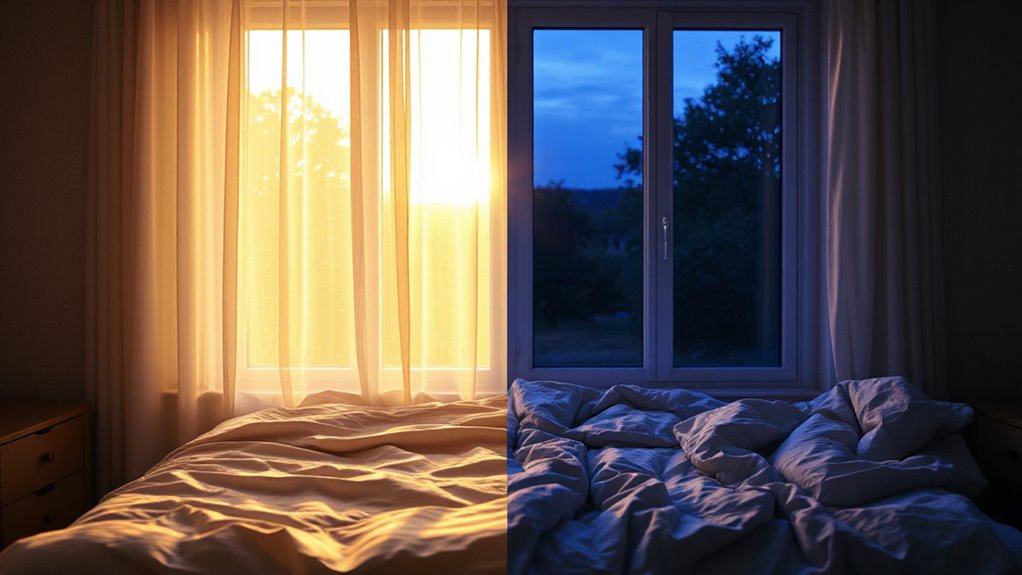
For decades, society has divided people into two distinct camps: the energetic early risers who greet the dawn with enthusiasm and the creative night owls who thrive under moonlight. These labels, known as chronotypes, reflect behavioral manifestations of our endogenous circadian system that governs preferred sleep-wake timing. However, rigidly adhering to these categories may actually create more problems than solutions in everyday life.
Chronotypes reveal our biological sleep preferences, but treating them as fixed identities may cause more harm than good.
Research reveals that chronotypes profoundly affect nearly every bodily function, including body temperature and hormone production. Studies of 26,000 UK Biobank participants demonstrate that evening types often show higher cognitive scores on tests measuring memory, reasoning, and processing speed. Yet this cognitive advantage comes with significant trade-offs. Night owls face 79% higher likelihood of poor heart health and 16% increased risk of heart attack and stroke compared to morning larks.
The mental health implications prove equally concerning. A survey of 75,000 adults found that evening types following earlier schedules fare better mentally than those staying up late, while morning larks rising early consistently show the best mental health outcomes. These differences persist even when accounting for sleep duration and consistency, suggesting that alignment between natural preferences and actual behavior matters tremendously. Surprisingly, night owls who stayed up late showed 20%–40% greater likelihood of mental health diagnosis compared with night owls on earlier schedules.
While genetics certainly play a role—genome-wide association studies have identified loci near CLOCK, PROK2, and other genes—the solution lies not in accepting labels as destiny but in strategic adaptation. Experts recommend that all chronotypes consider lights out by 1 a.m. for peak mental health. For those achieving 7-9 hours of sleep, brain function peaks regardless of specific timing. Researchers also found that reported insomnia did not significantly lower cognitive scores in these cohorts.
The evolutionary perspective offers valuable insight here. Chronotype diversity likely benefited ancestors through sentinel theory, where varied sleep shifts reduced group vulnerability. However, modern society overwhelmingly favors morning schedules, forcing evening types into constant misalignment that affects sleep, eating, exercise, and mood.
Rather than fighting innate biology or accepting disadvantages, individuals can find relief by making targeted adjustments aligned with their natural tendencies while gradually shifting toward healthier patterns. This balanced approach reduces cardiovascular disease risk and improves overall lifestyle without demanding complete transformation. Acknowledging how chronic stress can worsen misalignment and health outcomes may help motivate practical changes, especially around stress management.