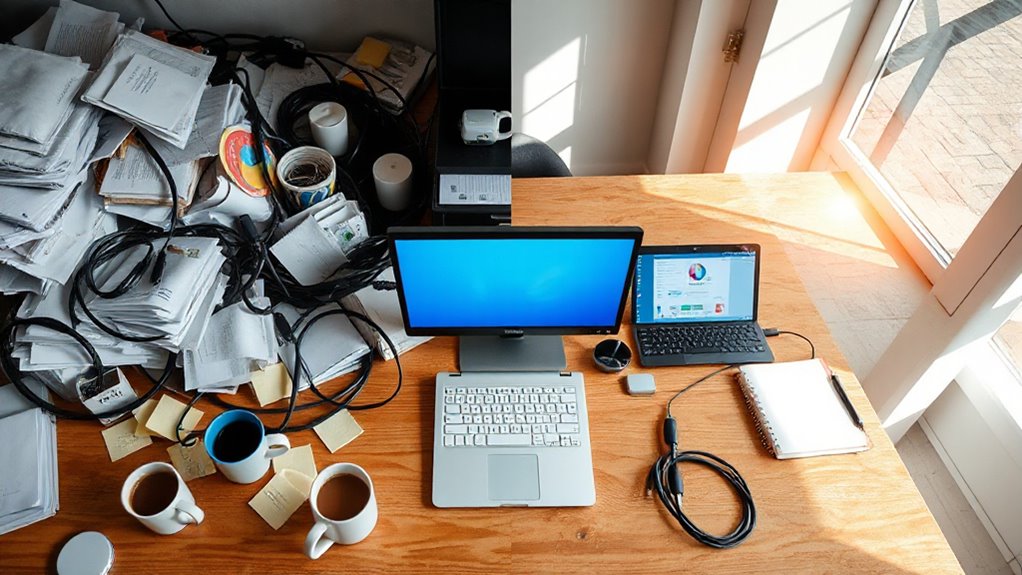
Administrative tasks consume a staggering 2.6 hours of the average employee’s workday, with email management and coordination work devouring 60% of available time and contributing to a persistent 54-minute productivity gap. The average office worker receives 117-121 emails daily, yet 62% are deemed unimportant, creating a cycle of constant distraction that forces window switching 37 times per hour. This overwhelming administrative burden directly impacts organizational performance, with 58% of employees falling short of productivity targets and delivering only 87% of expected output.
The transformation begins with a single strategic intervention: implementing AI-powered email optimization tools. Organizations adopting these solutions report productivity increases of 20-25% in email management alone, with some platforms saving four hours per person weekly. Writing, summarizing, and editing tasks experience gains of 5-25% when AI support is integrated, while overall task completion time drops 12-16%. These improvements address the root cause of administrative overload by automating routine correspondence, prioritizing messages, and streamlining response processes. Companies that adopt AI widely often report high productivity gains across multiple functions.
The impact extends beyond individual productivity metrics. Remote-only workers already average 29 more productive minutes daily compared to office-based colleagues, and hybrid arrangements enhance retention rates markedly. Employees with high flexibility report being 2.5 times more likely to feel their productivity is supported, while hybrid workers spending two days weekly from home are 33% less likely to leave their organizations. This flexibility, combined with AI-enabled efficiency gains, creates a compound effect that addresses both the quantitative productivity gap and qualitative job satisfaction. When properly implemented, Microsoft WorkLab found that 93% of Copilot users reported clearer thinking and reduced effort on root-cause analysis. Nearly half of hybrid and remote workers would accept an average 8% pay cut to maintain their remote work arrangements, demonstrating the significant value employees place on location flexibility.
Meeting inefficiency compounds the administrative challenge, with 71% of senior managers considering meetings unproductive and 47% of employees identifying them as the biggest time-waster. AI tools demonstrate remarkable capacity here as well, with users producing solutions matching the output of entire cross-functional teams. By reducing the administrative friction that fills the gap between the actual 5 hours 56 minutes of productive work and the target 6 hours 50 minutes, organizations unleash substantial performance improvements while supporting workforce wellbeing and retention.