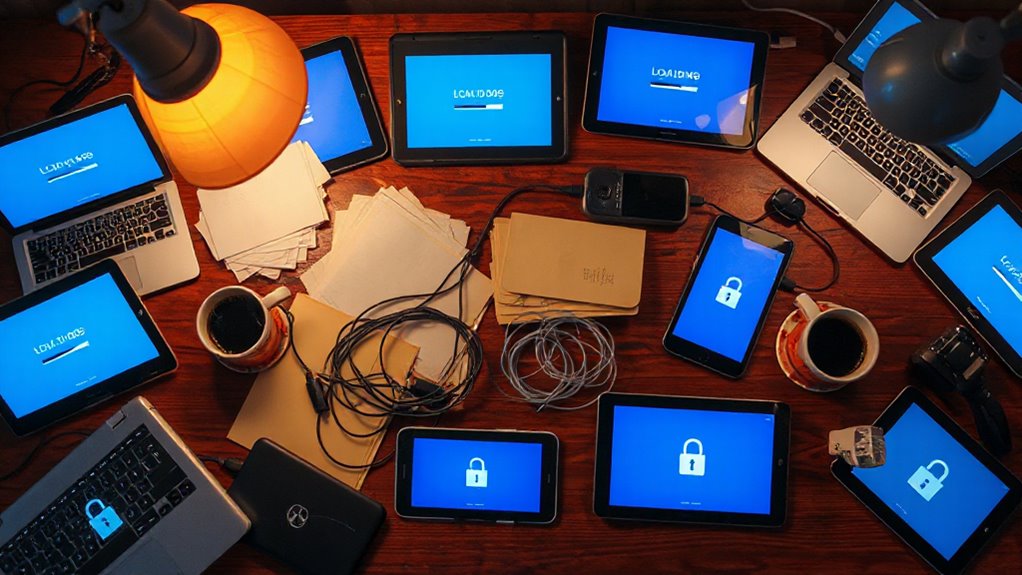
Half-finished tasks accumulate like unpaid debts in the modern workplace, draining momentum and fragmenting attention across multiple incomplete priorities. When workers pause projects to wait on prerequisites—whether approvals, information from colleagues, or external resources—they face a choice between remaining idle or switching to different tasks. Either option creates significant productivity costs that compound throughout the workday.
Waiting on prerequisites forces workers into a lose-lose choice: remain idle or switch tasks, both carrying steep productivity costs.
Task switching exacts a severe toll on efficiency, causing completion times to slow by 57% compared to uninterrupted work. Each quick switch costs over two hours of distracted time as the brain struggles to reorient and regain momentum. With average interruptions occurring 12 times every 32 minutes, workers lose approximately 10% of their time simply managing these handoffs. The cumulative effect shows up clearly in the data: interruptions lead to task progress slowdowns of up to 102%, effectively cutting productivity in half.
Information silos represent a particularly insidious form of prerequisite waiting, wasting 19% of the workday as employees hunt for answers, approvals, or resources. This structural inefficiency helps explain why only 53.3% of task time involves productive, focused work for individual contributors. The remaining hours dissolve into coordination overhead, context switching, and suspended tasks that languish in limbo.
The impact on completion rates reveals the downstream consequences. Individual contributors finish just 53.5% of planned tasks weekly, averaging only 4.2 hours per day on actual task work. A troubling 31.1% of teams accomplish less than 40% of weekly planned tasks, largely due to these structural bottlenecks rather than individual effort.
Focused work offers a clear antidote, reducing task completion time by up to 25% when workers can maintain concentration without interruption. Time blocking increases productivity likelihood by 1.6 times, suggesting that deliberately protecting periods for uninterrupted progress prevents the paralysis that waiting creates. The solution requires both individual discipline and organizational change—reducing dependency chains, improving information flow, and respecting focused work time. When prerequisites arrive promptly and interruptions decrease, workers reclaim the momentum that half-finished tasks systematically destroy. Visual tools like flowcharts and defined tasks can make those dependency chains visible and easier to manage.
Related Posts