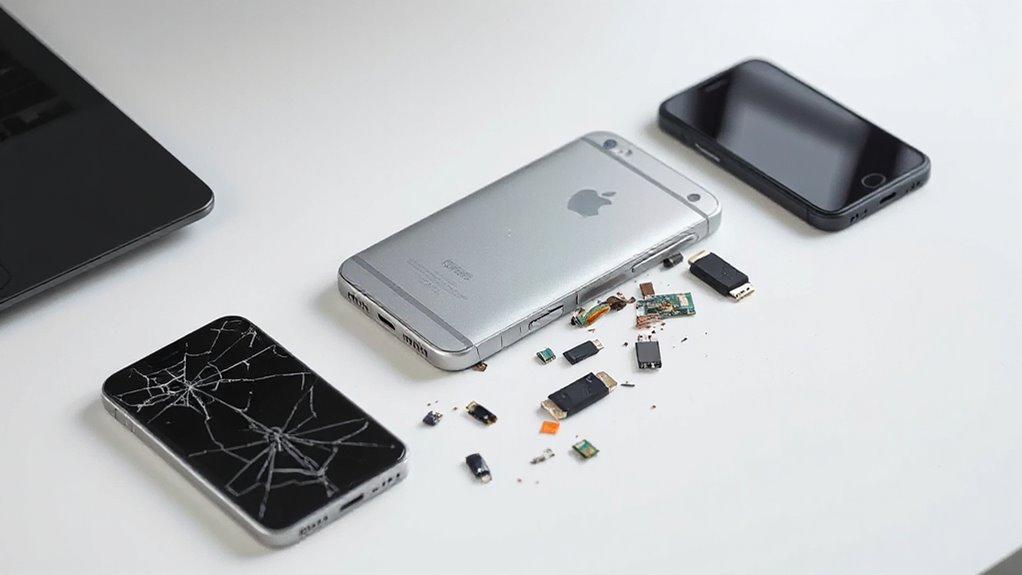
How long consumers hold onto their smartphones has become a defining factor in the modern economy, creating ripple effects that extend far beyond individual purchasing decisions. As Americans extend their phone ownership from 22 months in 2016 to 29 months by 2025, this seemingly prudent financial choice is quietly reshaping entire economic sectors.
Individual smartphone decisions are collectively transforming entire industries and reshaping America’s economic landscape in unexpected ways.
The productivity implications are substantial. Longer ownership cycles reduce U.S. national productivity by approximately 0.33% annually, translating to billions in economic losses. Small businesses face particular challenges, struggling with higher repair costs and reduced efficiency from outdated technology.
While individual consumers benefit from cost savings, workplaces absorb what economists call a “productivity tax” as older devices limit innovation adoption and slow business operations. The workplace burden becomes particularly evident as 88% of employees feel that innovation is hindered by outdated devices, creating systemic barriers to organizational advancement.
The tech sector feels these changes acutely. Device manufacturers and retailers experience suppressed sales as upgrade cycles lengthen, while the hardware-dependent tech economy confronts slowed growth. Investment and employment in supply chains suffer as consumer demand softens, with cost-conscious small and medium enterprises particularly hesitant to replace functioning devices. Companies frequently respond by developing incremental product updates to stimulate consumer interest and maintain sales momentum despite longer ownership cycles.
However, this shift creates opportunities alongside challenges. The global refurbished smartphone market is expanding rapidly, projected to grow from 375.99 million units in 2025 to 542.55 million by 2030. This 17% annual growth reflects increasing consumer awareness of both cost savings and environmental benefits.
Refurbished devices offer 30-50% savings compared to new phones while supporting circular economy principles.
Environmental considerations add complexity to this equation. While over 5 billion phones become electronic waste annually, extending device life by one year reduces total CO2 emissions by roughly one-third.
Leading manufacturers respond by targeting 75% recycled materials in new devices by 2030 and developing energy-efficient chipsets.
Smart consumers can navigate these trade-offs effectively. Repair options, trade-in programs, and quality refurbished alternatives help maximize device value while supporting sustainability goals.
The key lies in balancing personal financial benefits with broader economic and environmental considerations, recognizing that individual choices collectively shape market dynamics and national competitiveness in an increasingly connected global economy.