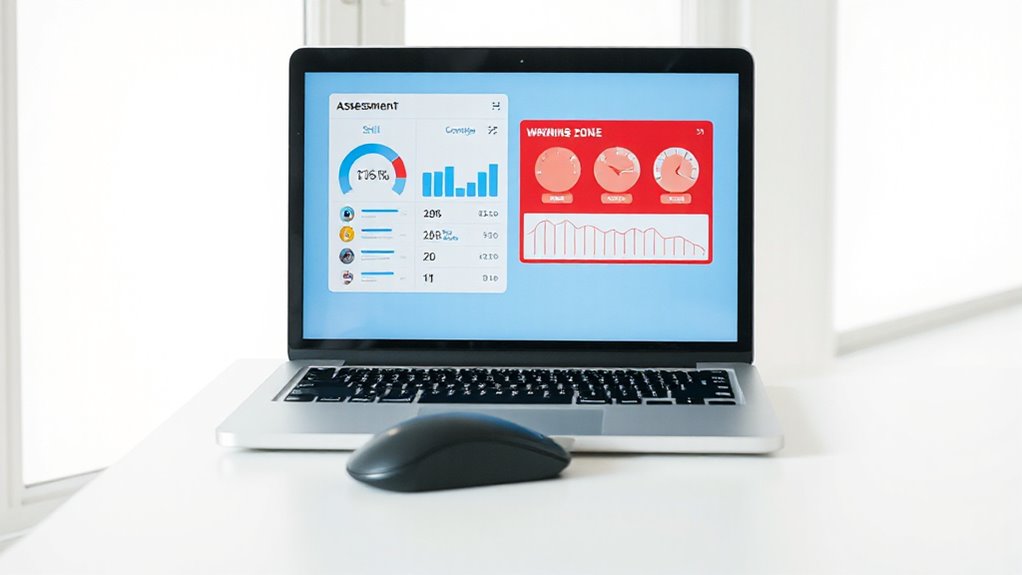
As artificial intelligence becomes increasingly integrated into workplace environments and educational settings, professionals across all industries find themselves needing to evaluate their current capabilities in this rapidly evolving field. Many individuals discover significant gaps between their perceived AI competence and their actual skill levels, making honest self-assessment essential for professional development.
Honest self-assessment reveals critical gaps between perceived and actual AI competence across all professional industries.
The foundation of effective AI skill evaluation begins with systematically documenting all AI-related experiences, including project involvement, completed coursework, earned certifications, and regular tool usage. This thorough review helps establish a clear baseline by analyzing past work and training to identify specific knowledge domains already mastered. Structured self-reflection questions can distinguish between beginner and advanced experience levels, providing clarity about current proficiency. Aligning skill evaluation with organizational goals ensures relevance and targeted development.
Digital self-assessment tools offer efficient, objective evaluation methods for busy professionals. The Jisc Discovery Tool, for example, provides quick AI and generative AI skills evaluation within fifteen minutes, delivering personalized reports that highlight both strengths and improvement opportunities. These tools focus on identifying skill development areas rather than ranking users, and their private nature encourages honest evaluation without peer comparison pressures. Users can pause and resume the assessment process without losing their progress, accommodating busy schedules and enabling thoughtful responses.
Modern AI-powered assessment platforms analyze learning patterns, knowledge gaps, and common mistakes to provide instant, objective feedback. These sophisticated tools automate progress tracking while reducing emotional bias in self-evaluation through features like adaptive learning, interactive quizzes, and targeted explanations that evolve with individual performance. Continuous evaluation fosters lifelong learning and promotes deeper retention of AI-related concepts. Regular measurement of progress allows for informed decision-making and identifies specific improvement opportunities.
Structured reflection frameworks enhance realistic self-judgment by encouraging users to analyze current performance, interpret findings, and plan specific improvement actions. AI assistance reveals discrepancies between perception and actual performance using objective data, helping individuals focus on one improvement area at a time to strengthen the feedback loop and avoid overwhelm. Understanding your knowledge gaps through systematic evaluation guides targeted improvement and strategic skill development in areas where competencies are lacking.
Effective self-reflection requires not only identifying mistakes but also implementing substantive improvements over time. Tracking score comparisons between self-assessment and AI feedback monitors progress and evolving understanding. For those serious about AI skill development, these assessment tools create safe practice environments that promote critical thinking while providing the objective insights necessary for meaningful professional growth in this dynamic field.