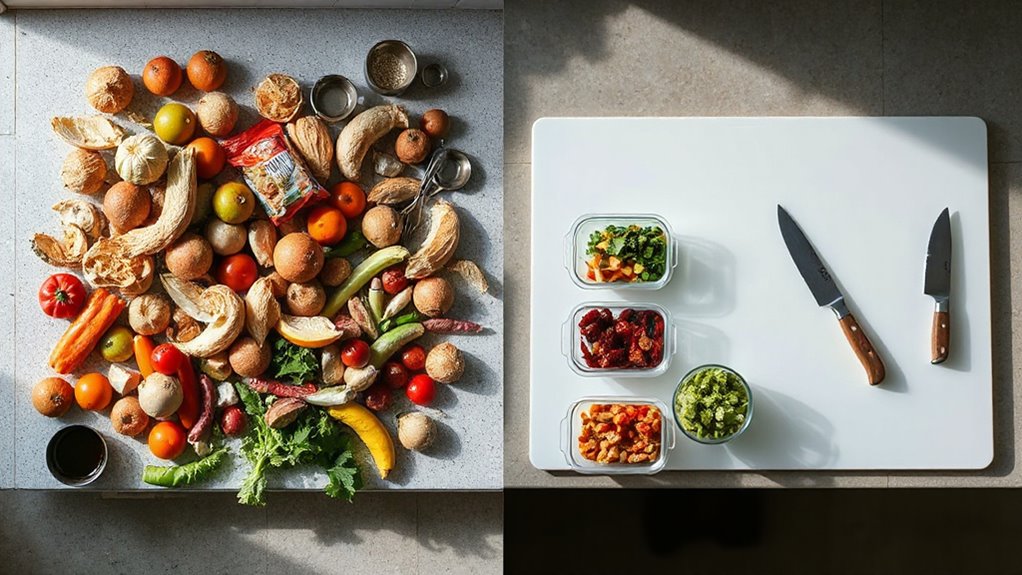
In an era where time has become one of the most precious commodities, the average American spends over an hour daily on food preparation and cleanup—a commitment that accumulates to nearly three full years over a lifetime. This substantial investment raises an important question: are traditional cooking methods unnecessarily consuming time that could be redirected toward other priorities?
The average American invests nearly three full years of their lifetime on food preparation and cleanup activities.
The data reveals striking disparities in how different groups approach meal preparation. While the average American over 18 dedicates 37 minutes daily to food-related tasks, usual meal preparers without fast food purchases spend 58 minutes.
Women invest 51 minutes compared to men’s 22 minutes, and households with children face even greater demands. These figures demonstrate that conventional cooking approaches create appreciable time burdens, particularly for those juggling multiple responsibilities.
Strategic meal planning emerges as a powerful tool for reclaiming time without sacrificing nutrition. Research shows that higher meal planning frequency predicts greater weight loss success and reduces unhealthy snacking among both parents and children.
Planning also helps individuals maintain healthy eating patterns during stressful periods when time pressures intensify. The key lies in preparation: those who plan meals the night before demonstrate better adherence to nutritional goals under stress.
Time optimization extends beyond the kitchen itself. Grocery shopping consumes an average of 60 minutes weekly, adding another layer to the food preparation equation.
Outsourcing through meal subscription services and leveraging ready-made components can dramatically reduce this burden while maintaining dietary quality. The statistics confirm that individuals spending more than two hours daily on food preparation consume appreciably more fruits and vegetables—8.4 servings weekly versus 6.1 for low-prep groups—but this advantage can be achieved more efficiently.
The solution isn’t eliminating home cooking entirely but challenging the assumption that traditional methods represent the only path to nutritious meals. By combining strategic planning, selective use of convenience options, and meal preparation techniques, individuals can reduce their daily commitment from 58 minutes to under 30 minutes while maintaining or even improving nutritional outcomes.
This represents genuine time savings without compromising health goals. Adopting meal planning and flexible work arrangements can help reclaim productive time for other priorities.