Why Most Habits Break Before They Become Automatic
Although most people expect new habits to click within a few weeks, research tells a different story.
Studies show that health-related habits typically take two to five months to develop, with some individuals requiring up to 335 days.
The real danger lies in the gap between early enthusiasm and genuine automaticity.
During this vulnerable window, motivation fades before the behavior becomes truly routine.
Early failure, thus, rarely reflects weak character.
It reflects incomplete habit encoding.
Understanding this distinction matters because it shifts the focus away from self-blame and toward smarter, more structured strategies that actually support lasting behavioral change.
A systematic review and meta-analysis of 20 studies found that habit scores improved significantly, with a standardized mean difference of 0.69 across health-related behavioral interventions.
In one study tracking daily behavior over 84 days, more than half of participants did not show the expected automaticity development pattern within the study window.
Biological and emotional factors like fear of failure and low self-efficacy also make it harder for routines to stick, so targeting self-efficacy can help bridge the gap.
What the Science of Micro-Habits Actually Reveals
Micro-habits work not because they demand less effort over time, but because they are deliberately designed to lower the barrier to starting.
Research shows that tiny behaviors reduce friction, making initiation easier and repetition more likely.
The science connects these small actions to cue-routine-reward loops, where consistent repetition gradually strengthens neural pathways until the behavior becomes automatic.
Implementation intentions, structured as “After X, I will do Y,” further support this process by linking a specific cue to a planned response.
Consistency, rather than intensity, drives lasting change, and micro-habits are most effective when anchored to stable, existing daily routines. This approach, known as habit stacking, pairs a new micro-habit with an already established behavior to create a reliable trigger for the new action.
Micro-habits are particularly powerful for addressing key health behaviors, including sleep, movement, stress management, and nutrition, because small daily actions can compound into meaningful momentum and long-term resilience over time.
Regular practices like mindfulness and short bouts of physical activity also boost attention and make habit maintenance easier by improving attentional control.
How Long Does a Micro-Habit Take to Stick?
How long it actually takes a habit to stick is one of the most misunderstood questions in behavior change.
The popular “21-day rule” has been widely debunked.
Research suggests most health habits require 2 to 5 months to become truly automatic.
One landmark study found a range of 18 to 254 days, with 66 days representing a common midpoint.
Even simple micro-habits need repeated cue-behavior pairings before they feel effortless.
Complexity and consistency both shape the timeline substantially.
Expecting overnight transformation leads to premature abandonment.
Setting realistic expectations, measured in weeks and months, keeps motivation intact through the entire formation process. The original “21-day” idea came from a plastic surgeon named Maxwell Maltz, who observed patient adjustment periods after operations and described it as a minimum rather than a rule.
Simpler habits that are personally chosen by the individual tend to form more quickly than complex behaviors imposed by external expectations.
Using Specific, Measurable targets for micro-actions makes tracking progress clearer and helps sustain consistency.
How to Build Your First 5-Minute Micro-Habit Today
Knowing that habit formation unfolds over weeks or months rather than days reframes the starting point entirely.
The goal today is simply beginning.
One tiny behavior, chosen carefully, removes the paralysis of overthinking.
A single sentence of journaling, two minutes of stretching, or one glass of water qualifies.
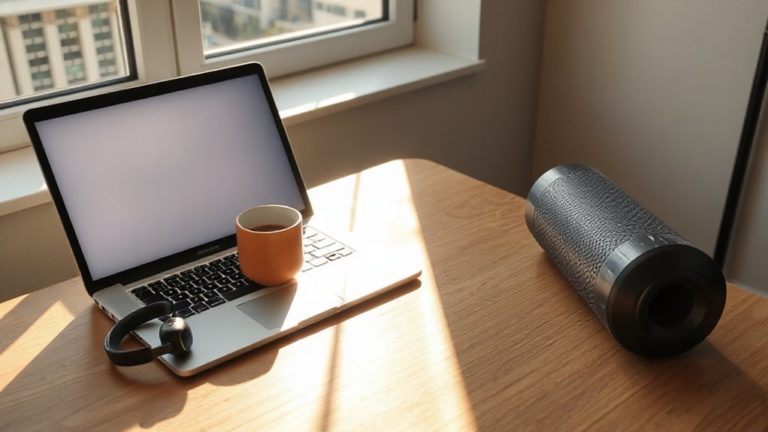
The action should pair with an existing daily event, such as after closing a laptop or before morning coffee.
Keeping supplies visible reduces friction immediately.
After completing the action, a brief celebration, even a quiet “good work,” signals success to the brain.
One line in a notebook confirms the day as a win. Two resets per day, one focused on the body and one focused on life, repeated consistently, build more momentum than attempting ten new behaviors at once.
Marking each completed day with a Y or N in a simple list makes it easy to see progress building across several weeks. Regular quarterly reviews help you adapt small habits into meaningful long-term change.
Anchor Your Micro-Habit to a Routine You Already Have
Without a reliable trigger, even the most carefully chosen micro-habit tends to fade within days. Anchoring a new behavior to an existing routine solves this problem by borrowing the strength of an already-automatic action. Daily rituals like brewing coffee, brushing teeth, or closing a laptop provide consistent, predictable cues. Breaks every 50-90 minutes can also be used as reliable timing anchors to maintain cognitive performance.
- Choose routines that happen every single day
- Select anchors with clear physical or time-based triggers
- Avoid vague triggers like moods or general intentions
- Keep the anchor specific in place or timing
- Use automatic routines rather than willpower-dependent ones
Specificity transforms a fragile intention into a dependable behavioral chain. The brain prefers certainty, which is why a reliable cue makes a new behavior far more likely to repeat consistently.
Related Posts