Why Screens Make It So Hard to Be Alone
Although screens have become an unavoidable part of modern life, their influence on mental presence is more disruptive than most people realize.
Notifications, likes, and short videos repeatedly activate the brain’s reward system, training it to seek constant stimulation.
Over time, this makes quieter, slower activities feel unbearable.
The brain grows accustomed to novelty and immediate feedback, making solitude feel uncomfortable rather than restorative.
Switching attention rapidly between digital inputs also reduces cognitive efficiency, leaving the mind fatigued yet restless. Regular practices like meditation and mindfulness can rebuild attention capacity and make solitude more tolerable.
Understanding this mechanism is the first step toward reclaiming the ability to simply be alone with one’s own thoughts.
Screen light, particularly blue light, can confuse the brain into acting as though it is still daytime, further disrupting the body’s ability to wind down naturally.
Beyond light alone, stress, caffeine, and an unfavorable sleep environment can interfere with rest in ways that are often more significant than screen exposure itself.
Give Yourself Planned Phone-Free Time Each Day
One of the most effective strategies for reclaiming solitude is scheduling phone-free time as a fixed daily commitment rather than relying on willpower alone.
Scheduling phone-free time as a fixed daily commitment is far more powerful than relying on willpower alone.
Research supports starting small, perhaps five minutes or a single hour, then gradually extending those windows as the habit stabilizes.
Pairing the offline block with a calming activity, such as deep breathing or a short walk, replaces screen stimulation with something genuinely restorative. Regular physical activity releases mood-boosting endorphins and helps reduce anxiety, so pairing phone-free time with moderate exercise can enhance benefits.
A consistent daily cue, like after dinner or before bed, strengthens the routine further.
Pre-committing to these moments reduces repeated in-the-moment decisions, making it far easier to protect attention over time. Just five minutes of aerobic exercise can begin to calm the mind and ease the transition away from screens.
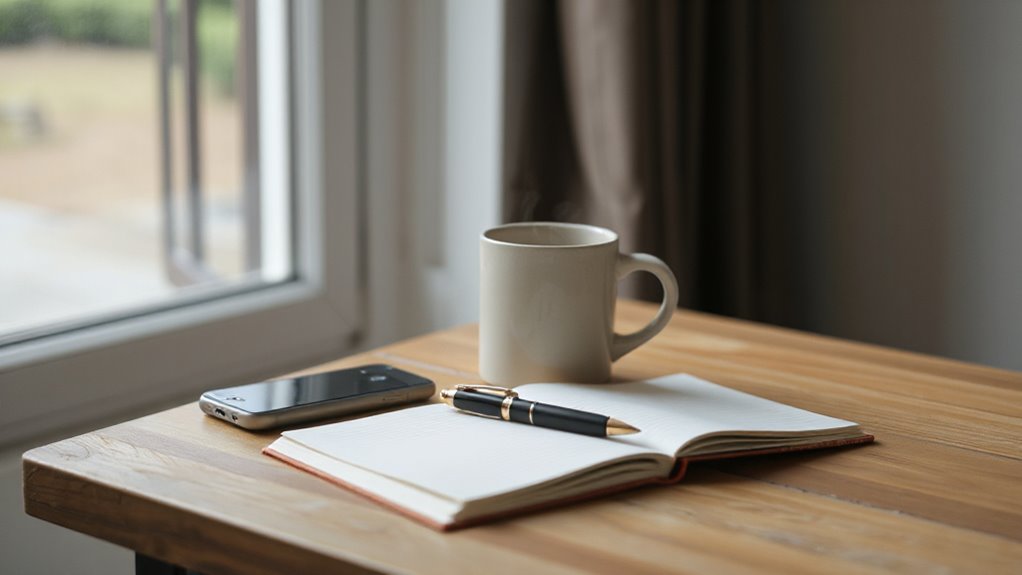
Expressing feelings through journaling or a creative outlet during phone-free time provides an additional emotional processing benefit that supports a calmer, more grounded state of mind.
Swap Screen Time for Activities That Quiet Your Mind
Replacing screen time with activities that genuinely quiet the mind requires more than simply setting a phone aside — it means filling that space with someone absorbing enough to hold attention on its own.
Certain activities consistently support this shift:
- Reading physical books or journaling by hand moves attention away from rapid digital input
- Hands-busy crafts like knitting, drawing, or playing an instrument replace passive scrolling with active focus
- Outdoor walks, gentle stretching, or quiet time in nature restore attention without digital stimulation
Each option offers meaningful engagement that screens rarely provide. Creative activities stimulate areas throughout the entire brain, supporting whole-brain integration in ways that passive content consumption does not.
Stepping away from screens also opens the door to face-to-face conversations, time in nature, and creative hobbies that restore positive brain signals linked to dopamine, serotonin, endorphins, and oxytocin. A simple change like creating a distraction-free workspace can make it far easier to sustain these screen-free activities.
How to Calm Your Nervous System When Alone Time Feels Hard
For many people, sitting alone without a screen feels less like rest and more like discomfort — a restless, edgy sensation that is difficult to name but hard to ignore.
That feeling often signals nervous system activation, not personal failure.
Simple techniques can help.
Deep breathing, particularly long-exhale breathing with a four-second inhale and six-second exhale, signals safety to the brain.
Grounding through the senses, such as naming five visible objects nearby, redirects attention outward.
Cold water on the face or gentle movement can also settle physical tension quickly.
Even two minutes of deliberate practice begins building tolerance for stillness. Stress is inevitable; the goal is learning to work with the nervous system rather than against it.
When alone, the brain loses access to natural emotional regulation signals from others, such as a calm voice or relaxed body language, which can cause the nervous system to default to a low-grade stress response.
Chronic activation can also raise inflammation and weaken immune defenses, increasing vulnerability to illness and other physical problems like elevated cortisol.
Build Your Tolerance for Being Alone Step by Step
Building tolerance for solitude works best when the process starts small and scales gradually. A five-to-ten-minute screen-free session, paired with something simple like tea or quiet sitting, gives the nervous system a manageable starting point. Short, timed sessions also create a sense of urgency that helps reduce procrastination and improve focus Pomodoro Technique.
Start small. A few quiet minutes with tea or still hands gives the nervous system somewhere safe to begin.
From there, steady expansion becomes possible.
- Move through clear stages: 15–30 minutes, then 45–60 minutes, then longer afternoon blocks
- Add one new solo context at a time, such as a walk or a solo meal
- Track progress by duration and setting, not mood alone
Discomfort is expected early. Spending 120 minutes in nature each week has been shown to reduce symptoms of depression and lower blood pressure.
Each completed session builds real capacity, regardless of how it felt. Uncomfortable feelings at the start are a normal part of the process, and continued practice over time is what transforms solitude from something difficult into something manageable.
Related Posts