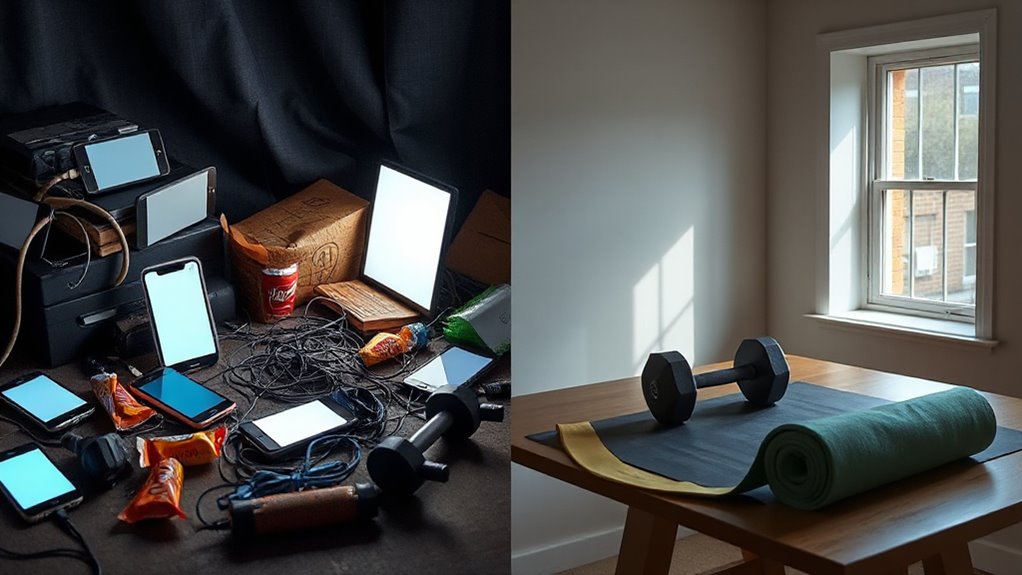
Despite widespread belief that modern life leaves no room for fitness, research reveals that Americans average over five hours of free time daily—more than enough to establish a consistent workout routine. Men average 356 minutes of leisure time, while women have 318 minutes available. Yet men spend only 24 minutes per day on physical activity, suggesting the barrier is not time scarcity but rather how people allocate their available hours. Substituting just 20 to 30 minutes of screen time with exercise proves entirely feasible for most individuals. Regular scheduling and task lists can help people identify where those minutes are lost and be reallocated to exercise, fostering better daily planning time audits.
The barrier to fitness isn’t lack of time—it’s how we choose to spend our five daily hours of leisure.
The key to building consistency lies in treating exercise as non-negotiable. Research demonstrates that scheduling workouts like work meetings, with calendar reminders and specific time blocks, markedly increases adherence. Studies show that exercising at a consistent time achieves 69.9% adherence via objective tracking and 87.4% by self-report, both exceeding the 60% benchmark. Consistent timing establishes environmental cues that support habit formation and protect designated exercise periods from competing demands. A randomized crossover study found that consistent exercise timing—whether morning or evening—produced medium- to large-sized effects in increasing moderate-to-vigorous physical activity compared to exercising at variable times.
Concerns about frequency and volume should not deter those with limited availability. Training just one day per week yields similar strength gains to higher frequencies when total weekly volume remains equal. For hypertrophy, studies recommend at least four weekly sets per muscle group, distributable throughout the week according to individual schedules. Importantly, 30-minute sessions can be divided into 10 or 15-minute segments across the day, making activity accessible even during fragmented schedules. Using time-blocking techniques to reserve short, consistent sessions can dramatically improve adherence for busy people.
The health returns justify this time investment. Meeting minimum guidelines of 150 to 300 minutes weekly of moderate activity, or 75 to 150 minutes of vigorous exercise, provides substantial mortality reduction. Individuals performing two to four times the minimum vigorous activity experience 21 to 23% lower all-cause mortality, while those meeting moderate guidelines maximize cardiovascular benefits. Even insufficiently active people gain 22 to 31% cardiovascular mortality reduction by reaching minimum thresholds. Advanced time-saving techniques such as supersets and drop sets roughly halve training time while maintaining volume, making workouts even more efficient for those with packed schedules.
Ultimately, reclaiming time for fitness requires prioritizing exercise with the same importance given to professional obligations, reducing passive screen consumption, and leveraging research-backed strategies like consistent scheduling and efficient training protocols. The time exists; the question is whether individuals choose to invest it in their health.