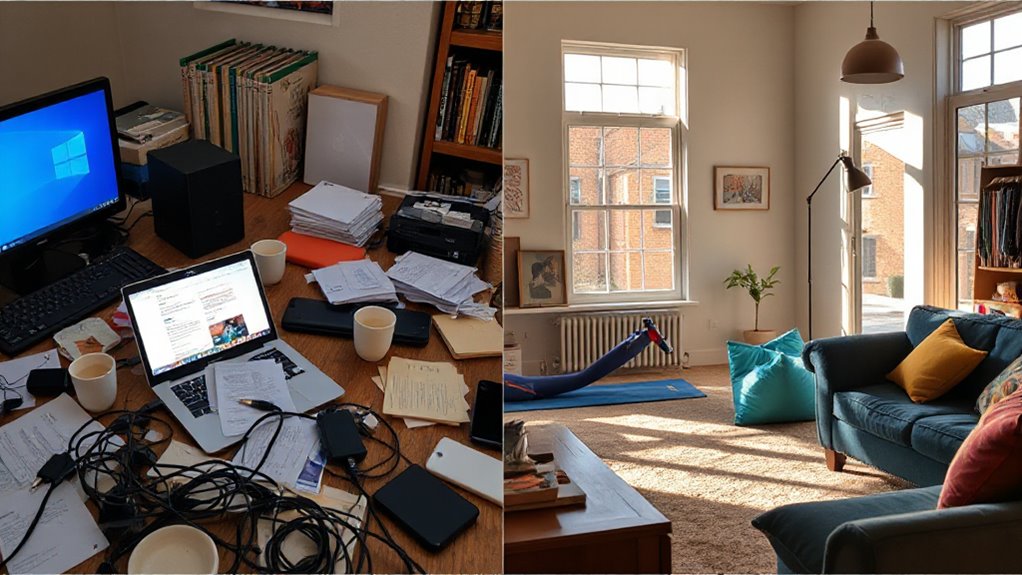
How can two days transform an entire week’s worth of well-being? The answer lies in understanding that most people approach weekends with the wrong framework, missing opportunities to truly recharge and connect in ways that benefit both immediate happiness and long-term health.
Research reveals that many professionals sabotage their weekends before they begin. Twenty percent of employees check email before noon on Saturday and Sunday, while 94% of U.S. service professionals work over 50 hours weekly, often extending into weekends. This work intrusion creates a cascade of stress that undermines the recovery process essential for sustained performance and mental health.
Work emails before Saturday noon sabotage weekend recovery, creating stress cascades that undermine the mental restoration professionals desperately need.
The most effective weekend formula balances five key components: sleep, socializing, hobbies, exercise, and minimal work interference. Sleep remains non-negotiable, requiring consistent seven to nine hours nightly rather than attempting weekend catch-up sessions, which fail to restore cardiovascular health after weekday sleep deprivation. Maintaining regular bedtimes prevents social jet lag, which occurs when weekend sleep schedules deviate significantly from weekday patterns.
Weekend warriors who concentrate 150 minutes of moderate-vigorous activity into one or two days show remarkable health benefits, including 32% lower all-cause mortality and 31% reduced cardiovascular death risk over eight years.
Social connection doubles on weekends compared to weekdays, reaching nearly one hour daily. This increase in meaningful interaction with family and friends in trusting environments drives much of the weekend’s positive psychological impact.
Advance planning through midweek communication helps secure zero to two social events without overwhelming schedules.
Hobbies deserve approximately two hours of weekend attention, as this engagement correlates with lower depression rates, higher life satisfaction, and reduced cardiovascular disease risk. The key involves presence during these activities, allowing genuine recharge rather than mindless distraction.
The emerging trend toward active lifestyles across all age groups reflects growing awareness that movement serves as medicine. Workplace yoga programs, family hikes, and community wellness initiatives demonstrate how everyday athletes prioritize consistent physical activity throughout the week. Modern workers face constant interruptions during weekday hours, making uninterrupted weekend recovery time even more crucial for mental restoration.
Successful weekends require intentional boundaries around work time, limiting professional tasks to two hours maximum while preserving three to four hours of unplanned flexibility.
This approach creates space for spontaneous connection and genuine rest, transforming weekends from recovery periods into launching platforms for thriving weeks ahead.