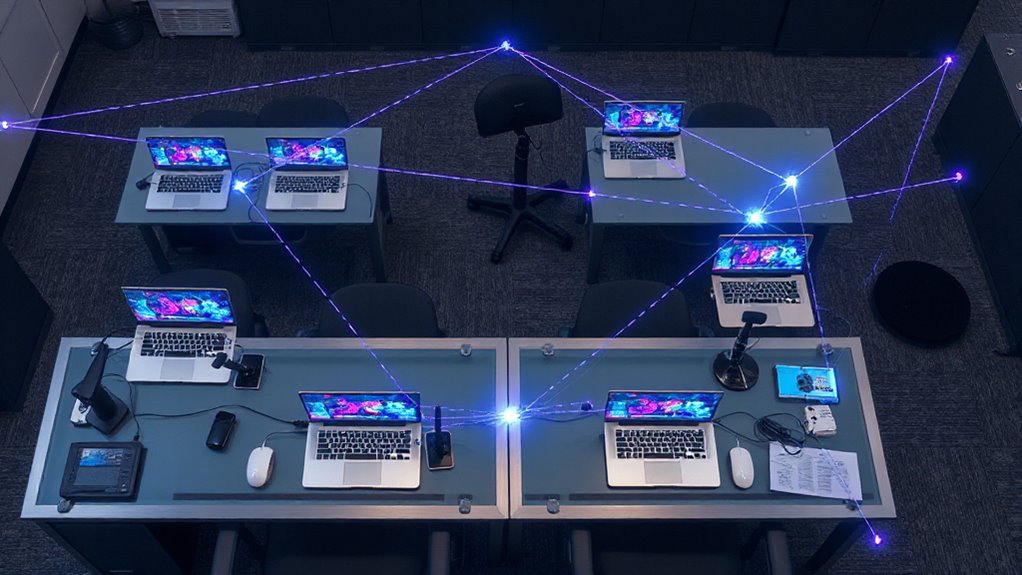
Collaboration in the modern workplace has evolved into a dynamic, technology-driven process that transcends traditional office boundaries and time zones. Teams now utilize cloud-based platforms and digital tools to work together seamlessly, whether in-person, remote, or hybrid arrangements. This strategic approach combines synchronous and asynchronous communication methods to achieve shared objectives efficiently. Studies show that effective collaboration can increase productivity by up to 28% while improving employee performance. Understanding these evolving dynamics reveals essential strategies for workplace success.

How has the fundamental nature of workplace collaboration transformed in recent years? The modern workplace has redefined collaboration as a dynamic process that transcends traditional boundaries, encompassing teamwork across teams, locations, and time zones through sophisticated digital tools and flexible arrangements. This evolution includes both synchronous and asynchronous communication methods, cross-functional partnerships, and the strategic use of technology to achieve shared objectives. Companies increasingly leverage cloud-based platforms to facilitate seamless real-time collaboration and improve operational efficiency.
The statistics reveal a remarkable shift in working patterns. Hybrid work has become the standard, with approximately 25% of all paid workdays in the United States conducted from home in 2025. Four in ten new job postings now offer remote options, while fully in-office requirements have dropped from 83% in 2023 to 66% in 2025. This transformation demands intentional inclusion and equitable participation for all team members, regardless of their physical location.
Technology serves as the backbone of modern collaboration, with 93% of employers and 90% of employees recognizing collaboration tools as essential for contemporary work. The adoption of online collaboration tools has increased by 44% since 2019, fundamentally changing how teams interact and produce results. These tools also help organizations maintain version control, reduce costs, and support modern business continuity.
However, this technological abundance presents challenges, as employees using more than ten applications report communication issues at higher rates than those using fewer tools.
The benefits of effective collaboration are substantial. Seventy-three percent of employees engaged in collaborative work report improved performance, while the same percentage experiences higher productivity under new working arrangements, averaging a 19% increase. Fully flexible arrangements yield the most significant productivity gains at 28%, demonstrating the power of well-structured collaborative environments.
Despite these advantages, challenges persist. Only 21% of employees worldwide are engaged, and 36% feel remote work negatively impacts workplace collaboration. Additionally, 20% to 35% of high-value collaborations rely on just 3% to 5% of employees, creating potential burnout risks. Poor collaboration also creates significant inefficiencies, with 64% of employees wasting at least 3 hours weekly due to collaboration inefficiencies. By mid-2024, 75% of workers had adopted AI tools to enhance their collaborative efforts, often implementing these solutions before their companies established formal AI strategies.
Success requires leadership commitment and cultural adaptation. Organizations must balance technological capabilities with human needs, ensuring that collaboration tools enhance rather than complicate communication.
Frequently Asked Questions
How Do You Measure the Success of Collaborative Efforts in Teams?
Organizations measure collaborative success through multiple key performance indicators that track both quantitative and qualitative outcomes. Project completion rates, on-time delivery percentages, and milestone achievement provide concrete metrics.
Meanwhile, communication response times and team pulse surveys reveal interaction effectiveness. Regular peer feedback ratings, cross-functional participation levels, and data analytics tools offer extensive insights into team dynamics.
These metrics enable leaders to identify improvement opportunities and celebrate collaborative achievements.
What Tools Are Most Effective for Remote Team Collaboration?
Remote teams achieve ideal collaboration through integrated communication platforms like Microsoft Teams or Slack, which combine messaging, video conferencing, and file sharing.
Visual project management tools such as Asana and Monday.com provide transparency and accountability.
Digital whiteboards like Miro facilitate creative brainstorming.
Success depends on selecting tools that integrate seamlessly with existing workflows and offer intuitive interfaces that encourage consistent adoption across all team members.
How Can Introverted Employees Be Encouraged to Participate More in Collaboration?
Organizations can encourage introverted employees to participate more in collaboration by implementing smaller group meetings and one-on-one discussions rather than large team gatherings.
Providing asynchronous collaboration tools allows introverts time to process information and respond thoughtfully.
Written feedback channels and structured meeting formats guarantee all voices are heard.
Additionally, balancing collaborative sessions with independent work time prevents social burnout while leveraging introverts’ analytical strengths.
What Are the Biggest Obstacles to Effective Workplace Collaboration?
The biggest obstacles to effective workplace collaboration include communication breakdowns, with miscommunication causing 28% of missed deadlines and workers handling 117 emails daily.
Organizational silos prevent transparency, as 55% cite poor information sharing as barriers.
Leadership deficits affect 44% of teams, while low trust undermines cooperation.
Additionally, meeting overload wastes three to six hours weekly for 64% of employees, and technological challenges delay 72% of hybrid meetings.
How Do You Handle Conflicts That Arise During Collaborative Projects?
Successful conflict resolution in collaborative projects requires open communication and proactive engagement. Teams should address disagreements promptly through direct dialogue, seeking win-win solutions rather than avoiding issues. Establishing clear communication channels reduces resolution time by up to 50%.
When conflicts escalate, neutral mediators can guide discussions effectively. Training employees in conflict management techniques promotes collaborative problem-solving, strengthens relationships, and transforms potential disruptions into opportunities for innovative solutions.