How can remote teams maintain the seamless collaboration and productivity that traditional office environments once provided? The answer lies in understanding why conventional task lists fall short in distributed work settings and embracing smart tools designed specifically for remote collaboration challenges.
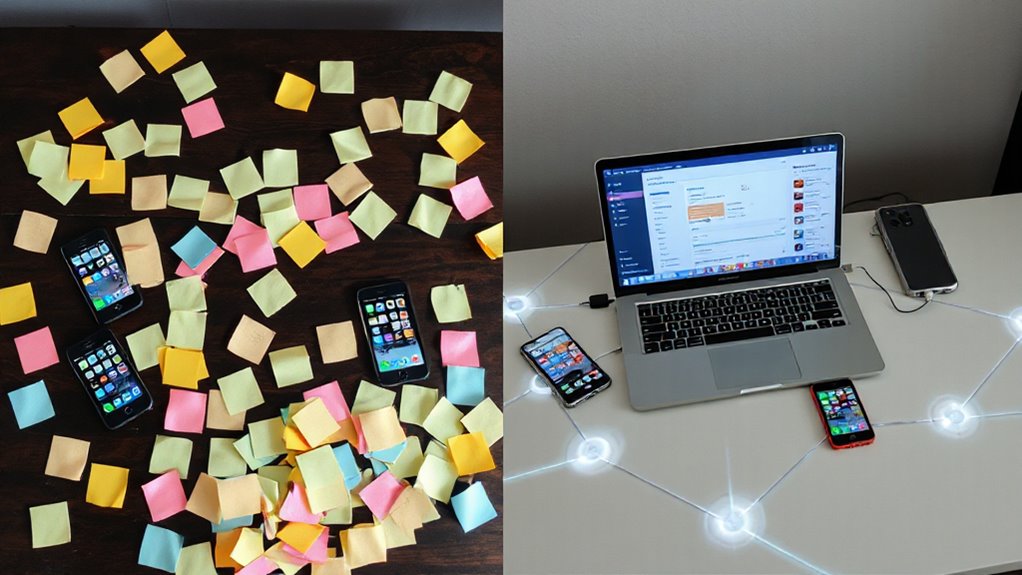
Traditional task lists create fragmented workflows that force remote teams to juggle multiple platforms for communication, project management, and documentation. This constant switching between applications disrupts focus and creates information silos that hinder effective collaboration. Remote workers often struggle with outdated task management approaches that lack real-time visibility, making it difficult to coordinate across different time zones and work schedules. Measuring productivity properly requires aligning these efforts with organizational goals to ensure relevance.
Fragmented task lists force remote teams to constantly switch platforms, disrupting focus and creating information silos that hinder collaboration.
Smart tools like ClickUp, Asana, and SmartSuite address these limitations by combining notes, tasks, calendars, goals, and dashboards within unified platforms. These all-encompassing solutions eliminate the need to switch between multiple applications, streamlining workflows and maintaining team focus. Built-in chat and document collaboration features enable immediate feedback through comment-based task collaboration, reducing email dependencies that slow project momentum.
Advanced workflow automation represents another significant advantage over traditional methods. Custom automation reduces manual task management while AI-powered features streamline processes and accelerate project execution. Task dependencies and hierarchy creation allow teams to manage complex projects with nested structures, providing full visibility into work breakdown without overwhelming individual contributors. Utilizing multifactor productivity approaches can further enhance understanding of these complex workflows.
Flexible visualization options accommodate diverse team preferences through multiple views including Gantt charts, timeline perspectives, and kanban boards. Time tracking capabilities help remote teams monitor productivity and establish accurate estimates, while whiteboards and virtual canvases enable agile workflow development and strategic planning sessions. Effective project tracking solutions ensure teams can monitor progress and receive productivity reporting that provides insight into individual and team performance metrics.
Scalability ensures these tools grow with organizations, from GoodDay’s free tier supporting unlimited projects for up to fifteen users, to enterprise-level platforms like Jira that handle complex multi-team initiatives. Asynchronous workflow support allows distributed teams to work effectively across time zones, while integration with communication platforms such as Slack, Gmail, and Google Calendar centralizes information flow. These platforms provide native integrations that ensure seamless communication and workflow continuity by connecting with existing productivity tools.
Smart tools transform remote team productivity by replacing fragmented task lists with comprehensive collaboration platforms that address the unique challenges of distributed work environments.
Related Posts