Instant messaging has transformed workplace communication, but this convenience comes with a significant cost: constant interruptions that fragment attention and derail productivity. With 57% of workers relying on platforms like Slack or Google Chat, these tools have become essential yet increasingly disruptive elements of the modern workplace. The data reveals a troubling pattern: office workers face interruptions every 11 minutes on average, with nearly half of employees distracted at least once every 30 minutes by notifications alone.
The convenience of instant messaging comes at a steep price: fractured attention, constant disruptions, and diminished workplace productivity.
The impact extends far beyond momentary disruptions. Research shows that workers require 23 to 25 minutes to refocus after an interruption, meaning even brief message checks can consume significant portions of the workday. Information workers collectively spend over two hours daily managing interruptions, while those using chat apps on personal devices add another 16 minutes of nonwork distractions. When 78% of employees feel overwhelmed by notification volume and 68% lack adequate uninterrupted focus time, the problem demands immediate attention. Companies that deploy AI-driven notification management can save time by filtering nonessential alerts and reducing needless interruptions.
Interestingly, 44% of interruptions are self-inflicted, with workers checking emails, texts, and social media independently. This tendency is reinforced by poor notification management practices, as 40% of workers never mute or snooze alerts. The proliferation of multiple messaging platforms across 91% of enterprises compounds the issue, forcing employees to monitor numerous channels simultaneously. The challenge intensifies for sequential processors, who must restart tasks from the beginning after each interruption, experiencing particularly severe productivity losses.
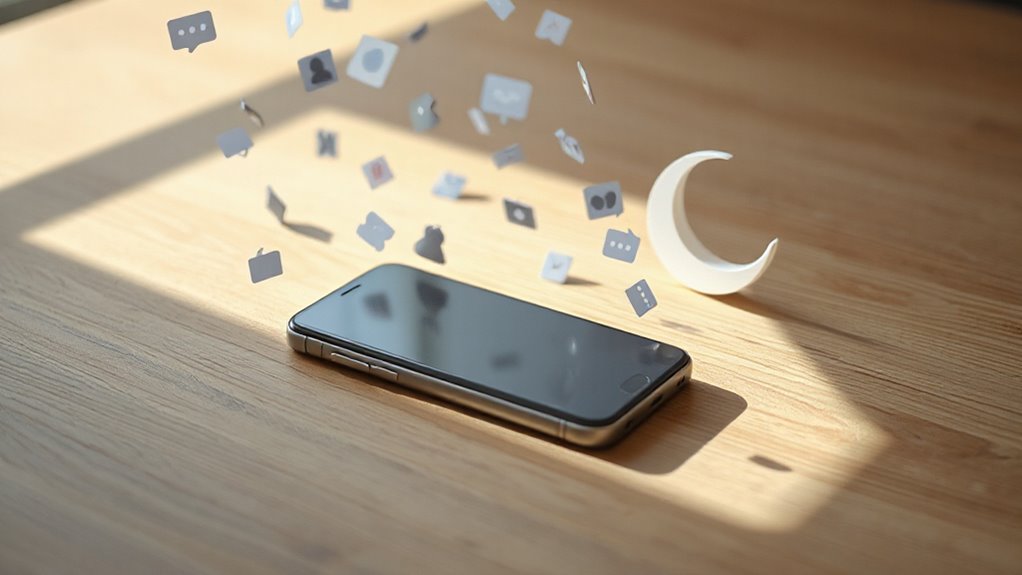
Effective control requires deliberate action. Establishing boundaries starts with strategic use of “do not disturb” features and signing out during non-core hours. Workers should mute or snooze notifications to eliminate background distractions, particularly during deep work sessions. Since instant messaging ranks third among digital stressors after video calls and email, organizations must promote clearer communication norms. Reserving synchronous tools exclusively for urgent matters while favoring asynchronous alternatives for routine exchanges can dramatically reduce interruption frequency. Additionally, distractions peak at specific times throughout the day, with 12 p.m., 3 p.m., and 4 p.m. representing the most challenging periods when employees should exercise heightened discipline over notification responses.
Companies implementing intentional instant messaging policies have achieved measurable results, with some reducing email volume by 32% through structured Slack usage. The solution lies not in abandoning these valuable tools but in wielding them strategically, ensuring they serve productivity rather than undermine it.