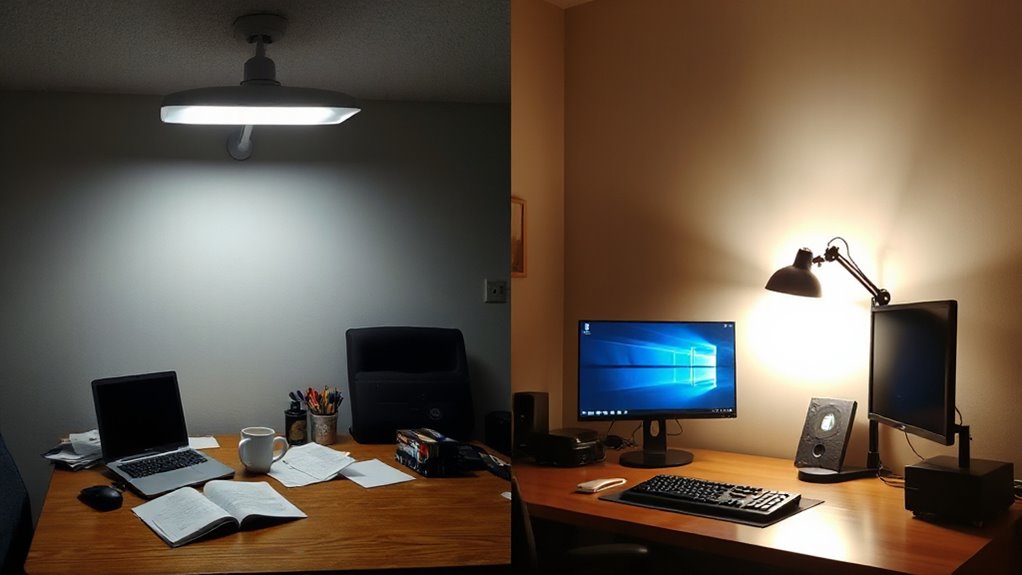
The workspace-at-home revolution has transformed how millions approach their daily routines, yet many overlook a critical element that shapes productivity, well-being, and comfort: lighting. Poor illumination triggers eye strain, fatigue, and headaches that undermine even the most dedicated work efforts. Fortunately, modern LED solutions offer energy-efficient alternatives that eliminate these problems while reducing electricity costs by up to 75% compared to traditional incandescent bulbs.
Selecting the right color temperature proves essential for creating headache-free environments. Experts recommend 3000K soft lighting for home offices, producing a warm, inviting atmosphere that feels human-centric rather than clinical. This neutral-warm range avoids the tiring effects of cool 4000K+ temperatures common in commercial settings, which can induce fatigue over extended periods. For those seeking enhanced wellness benefits, human-centric lighting systems shift color temperature throughout the day to mimic natural daylight cycles, promoting morning alertness and evening relaxation by aligning artificial light with circadian rhythms.
Smart LED technology takes home office lighting beyond basic illumination. IoT-enabled fixtures connect to occupancy sensors and natural light detectors, automatically adjusting brightness based on time of day, room usage, and personal preferences. Voice control through apps and assistants like Alexa or Google Assistant provides convenient hands-free operation, while integration with thermostats and security systems creates holistic home automation. These features support the rapid growth in residential smart lighting demand, with the North America market projected to expand from $15.6 billion in 2026 to $27.1 billion by 2033 at an 8.2% compound annual growth rate.
Implementing zoned and layered approaches maximizes effectiveness in home workspaces. Position softer lighting near reading areas, brighter task illumination at desks, and accent fixtures along walkways to create varied zones that follow different activities. This prevents overlighting while maintaining appropriate brightness where needed most. Dimming capabilities and scheduling functions further optimize energy consumption, and real-time monitoring enables predictive maintenance that prevents disruptive downtime. Government incentives including ENERGY STAR rebates and utility subsidies make upgrading more affordable, accelerating adoption of these headache-preventing solutions. Modern systems also offer multi-factor authentication and audit trails to help secure connected lighting as part of a smart home ecosystem.
Related Posts