While many factors influence daily vigor, the strategic composition of meals plays an essential role in maintaining consistent energy levels throughout the day. Research demonstrates that particular nutritional choices can prevent the dreaded afternoon slump without requiring excessive caloric intake or leaving individuals feeling hungry.
Strategic meal composition maintains steady energy throughout the day without excessive calories or hunger, preventing afternoon energy crashes through informed nutritional choices.
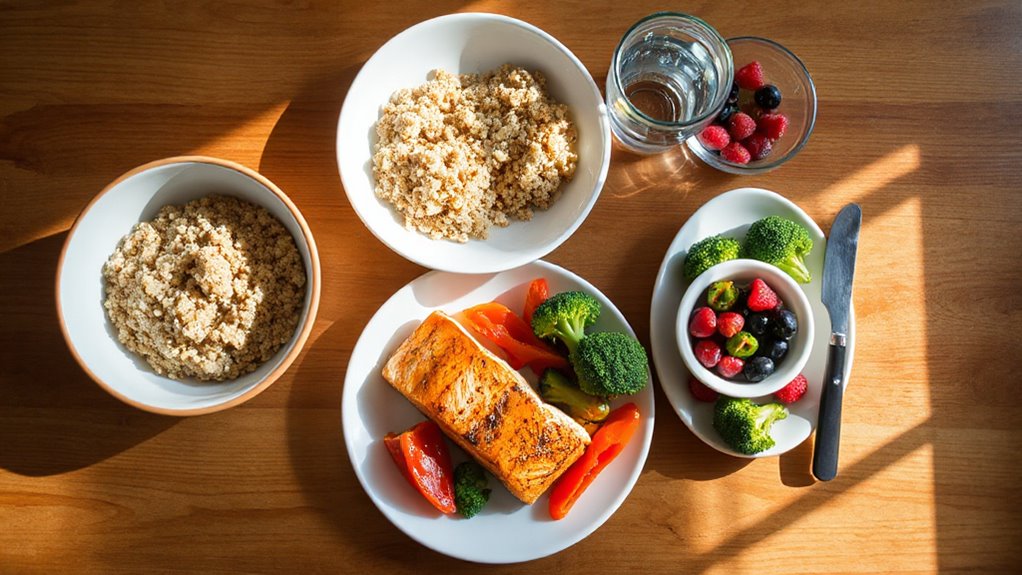
The foundation of sustained energy lies in balanced meal construction. Combining whole grains, lean protein, fiber-rich fruits and vegetables, and low-fat dairy creates a nutritional framework that supports consistent vitality. Regular fueling with protein, healthy fats, fiber, and complex carbohydrates maintains energy from morning through evening. Starting with a protein-rich breakfast proves particularly effective, reducing later cravings and preventing the common 3pm energy crash that drives many toward quick-fix snacks.
Beyond macronutrient selection, meal texture notably influences eating behaviors and subsequent energy regulation. Studies reveal that slower-textured meals naturally moderate eating rate, leading participants to consume 369 fewer calories daily over extended periods. This texture-based approach works without compromising meal satisfaction or familiarity, as nearly all participants unconsciously adjusted their eating pace to match food texture without explicit instruction. The cumulative effect proved substantial, exceeding 5,000 calories over just fourteen days.
Energy density represents another powerful lever for maintaining satiety while controlling intake. Incorporating water-rich foods enhances fullness and reduces overall consumption without deprivation. Research shows that soup formats, where water integrates into the food matrix rather than served alongside, reduced lunch energy intake by 26 percent compared to solid preparations. Similarly, children naturally consumed less energy when served meals with 19-33 percent lower energy density over multiple days, suggesting this principle works across age groups.
The strategic combination of these approaches offers practical pathways to sustained energy. Slower-textured foods paired with lower energy density naturally moderate intake while maintaining satisfaction. Adding fruits and vegetables increases meal volume and fiber content without excessive calories. This evidence-based framework empowers individuals to construct meals that genuinely support consistent daily energy, preventing afternoon crashes through thoughtful nutritional architecture rather than restrictive dieting or constant hunger. Regular physical activity also complements these dietary strategies by releasing mood-boosting endorphins that improve mental energy and resilience.
Related Posts