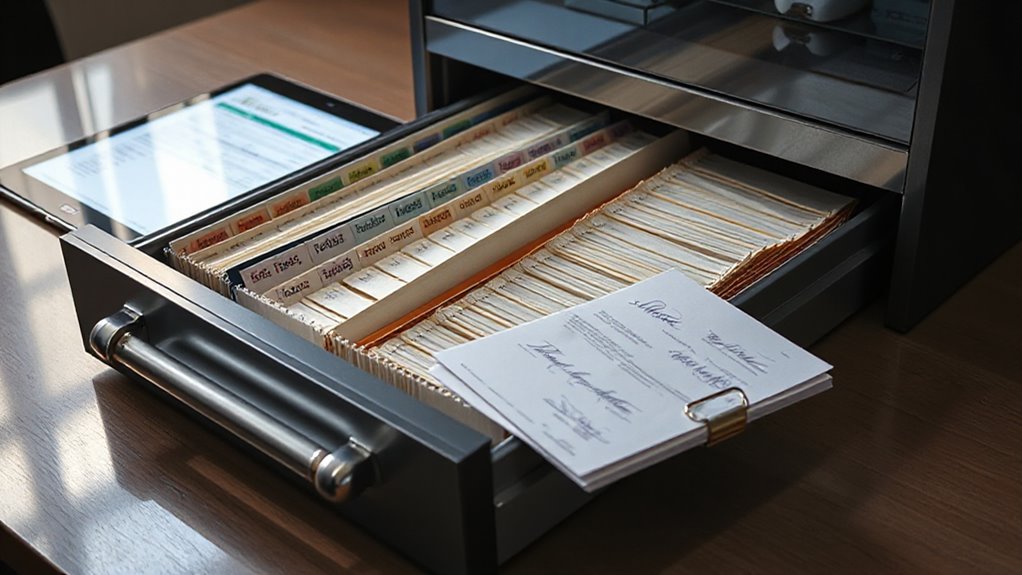
Why Proof of Work Goes Missing Before Reviews
Proof of work goes missing before reviews more often than most teams realize, and the causes tend to be structural rather than accidental.
Proof of work disappears before reviews more often than teams expect — and the reasons are almost always structural.
Jobs moving between teams without a mandatory closeout step leave no final record behind.
Abandoned reviews stay open indefinitely, creating the appearance of activity without producing a completed archive.
Role changes mid-review can freeze records in an unresolved state.
Proofs set up incorrectly never reach a decision point, widening the gap between finished work and documented completion.
Recognizing these patterns early gives teams a realistic foundation for building more reliable tracking habits before reviews begin. The original concept was designed around asymmetry between effort and verification, where producing proof requires meaningful work but confirming it remains straightforward.
The term itself has a formal history, with Markus Jakobsson coining the specific designation in 1999 to describe a model where effort is expended upfront and the result can be independently confirmed.
Establishing centralized storage and consistent metadata practices prevents many of these issues by ensuring documents are captured and discoverable throughout the review lifecycle.
Build a Tracking System That Captures GPS, Photos, and Timestamps on Every Job
Once a team understands why documentation gaps happen, the next step is putting a system in place that removes the uncertainty entirely.
Apps like Timemark, ProofCam, and Timestamp Camera stamp GPS coordinates, full addresses, timestamps, and job-specific details directly onto each photo at the moment of capture.
This approach eliminates manual entry mistakes and ties every image to a specific work order.
Visible overlays make proof readable inside the photo itself, not buried in hidden metadata.
Prioritizing automatic, capture-time stamping ensures that location and time data cannot be added or changed after the fact, strengthening the record’s credibility substantially. Cloud-based access also lets teams retrieve stamped proof from any device, supporting remote and hybrid workflows.
Tools built for this purpose are designed specifically for industries like construction, inspections, and field service, where verified photo proof is a routine job requirement.
Built-in verification features use a unique photo code to ensure every record remains authentic and traceable across the entire project lifecycle.
How to Turn Proof of Work Into Audit-Ready Records for Payroll and Compliance
Capturing solid job documentation is only half the battle — organizing that documentation into records that hold up under payroll reviews, compliance checks, and formal audits is where many teams fall short. Implementation typically takes 3-12 months for full deployment in larger organizations.
Audit-ready records require uniform templates, unique job identifiers, and consistent naming conventions applied across every crew and shift. Each record should preserve a complete sequence of actions, measurements, approvals, and timestamps so the full work path remains traceable. Version histories and approval trails confirm who reviewed and finalized each record. Tamper-evident storage and defined retention policies then protect that evidence, keeping it accurate, accessible, and verifiable throughout the entire compliance cycle. When a warranty claim or compliance review surfaces months after delivery, teams with complete build histories can respond immediately without searching folders or relying on memory.
Fragmented records scattered across tools and systems remain one of the most common reasons teams struggle to produce clean evidence when it matters most, making unified lifecycle data a critical foundation for consistent audit readiness.