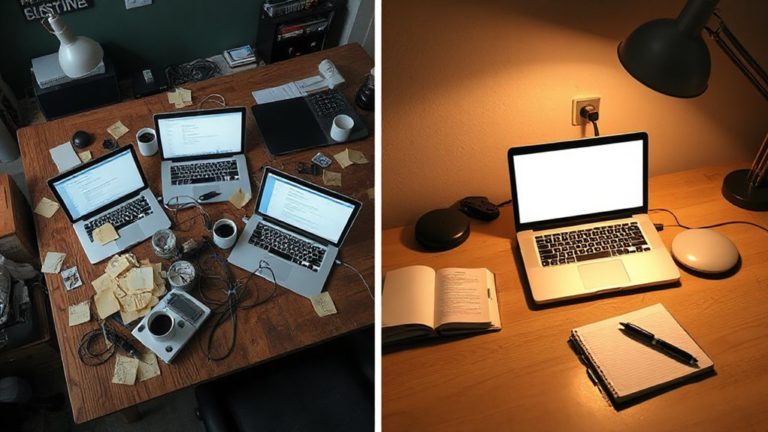
How Screen Work Rewires Your Brain’s Attention and Memory
Behind every glowing screen lies a subtle but measurable transformation occurring within the brain. Research confirms that excessive screen time contributes to thinning of the cerebral cortex, the region governing memory, decision-making, and problem-solving. Chronic, unrelieved demands on attention can also trigger elevated cortisol that undermines cognitive recovery.
Meanwhile, attention systems face their own challenges. Screens engineered to capture focus condition the brain to expect constant stimulation, making quieter tasks feel nearly impossible. Even a nearby, unused phone divides concentration.
Night screen exposure compounds these effects, producing lower scores in working memory and processing speed. Recognizing these patterns is the first step toward protecting cognitive performance across demanding workdays. Studies also link high screen use to lower gray matter volume, a loss that affects movement, memory, and emotional regulation.
One study examining 145 healthy young adults found measurable associations between screen time patterns, including night screen exposure, and performance on cognitive assessments evaluating attention and processing ability.
Why Your Brain Loses Focus Halfway Through the Workday
Many professionals notice their concentration beginning to slip well before the afternoon ends, and the reasons are more physiological than motivational.
Several compounding factors quietly erode mental sharpness throughout the day:
- Cortisol spikes from mounting stress impair memory and sustained attention.
- Decision fatigue accumulates alongside mental exhaustion, slowing cognitive processing.
- Sleep debt reduces vigilant attention, causing measurable lapses in accuracy.
- Constant task-switching drains energy reserves, dropping productivity by 40%.
Recognizing these patterns empowers professionals to schedule demanding work earlier, incorporate intentional breaks, and protect sleep, transforming awareness into a practical strategy for sustaining daily performance. Mental fatigue also triggers glutamate buildup in the lateral prefrontal cortex, biasing the brain toward quick rewards and making it harder to resist distractions as the workday progresses.
Compounding these challenges, multitasking and constant interruptions can gradually train the brain to remain in an unfocused state, increasing frustration and stress while lowering overall output across the workday. Acute and chronic workplace stress can also raise blood pressure through hormonal and sympathetic activation, contributing to cardiovascular strain and reduced cognitive resilience, especially in high-demand jobs with sustained stressors like job strain.
Why Screen Fatigue Drains Your Mental Energy Before Lunch
By mid-morning, screen fatigue has already begun quietly dismantling focus and mental energy, often well before lunch arrives. Reduced blinking during screen use drops by up to 60%, straining eye muscles and accelerating cognitive exhaustion. Blue light suppresses melatonin, disrupting natural circadian rhythms and overloading neural circuits. The lateral prefrontal cortex can become taxed by constant visual input, reducing its ability to suppress irrelevant signals and maintain sustained attention prefrontal filtering.
Simultaneously, the prefrontal cortex struggles under constant visual stimulation, impairing decision-making and deepening brain fog. Elevated cortisol compounds this drain, converting morning productivity into premature fatigue. Constant notifications and multitasking further erode this cognitive reserve, quietly weakening memory retention and deep focus before the first half of the workday has even passed. Recognizing these biological mechanisms empowers professionals to respond proactively, whether through scheduled screen breaks, blue light filters, or mindful blinking exercises, preserving mental sharpness throughout the entire workday. Prolonged screen use also creates a persistent mismatch between constant visual input and physical stillness, disrupting the body’s natural movement–focus rhythm and quietly compounding mental exhaustion throughout the day.
How Computer Work Disrupts Your Sleep and Destabilizes Your Mood
The damage that computer work does to sleep begins long before the moment a person finally closes their eyes. Evening screen exposure quietly builds toward serious consequences:
- Blue light suppresses melatonin, delaying sleep onset noticeably.
- Circadian rhythms shift, leaving the brain confused about when to rest.
- One hour of post-bedtime screen use reduces sleep by 24 minutes.
- Poor sleep destabilizes mood, increasing anxiety and daytime fatigue.
Recognizing these patterns empowers workers to act. Setting firm screen boundaries two hours before bedtime meaningfully protects sleep quality, mental clarity, and emotional stability throughout the following day. Chronic digital insomnia has also been linked to a measurably weakened immune response, making consistent sleep protection a matter of physical health, not just productivity. Research consistently shows that type of screen activity — whether social media, streaming, or browsing — matters far less than simply the total time spent on screens after going to bed. An important consequence is that insufficient sleep is associated with a markedly higher risk of depression and anxiety, highlighting the mental health stakes of nighttime screen use.
How to Protect Your Focus During a Long Computer Workday
Protecting focus during a long computer workday requires deliberate effort, but the strategies that make the greatest difference are surprisingly practical.
Blocking 90–120 minutes for deep work during peak energy periods creates structure that guards concentration from constant interruptions. Disabling notifications, silencing the phone, and closing unnecessary browser tabs removes the digital noise that quietly fragments attention. Most professionals waste 3.2 hours weekly due to miscommunication, so communicating availability windows to colleagues, such as “heads down 9–11 a.m.,” sets realistic expectations. Strategic breaks every 60–90 minutes restore mental clarity rather than deplete it. Communicating availability windows to colleagues, such as “heads down 9–11 a.m.,” sets realistic expectations. Together, these habits build a sustainable rhythm that supports consistent, high-quality output throughout the entire workday. Sharing your calendar with co-workers signals unavailability and helps manage expectations around response times and interruptions.
Designating a specific area of the home exclusively for work helps the brain associate that space with focus and productivity. Using a home office, a dedicated corner, or even a consistently arranged table creates the physical boundary that separates work from leisure, reinforcing a professional mindset without requiring a commute.
Related Posts