







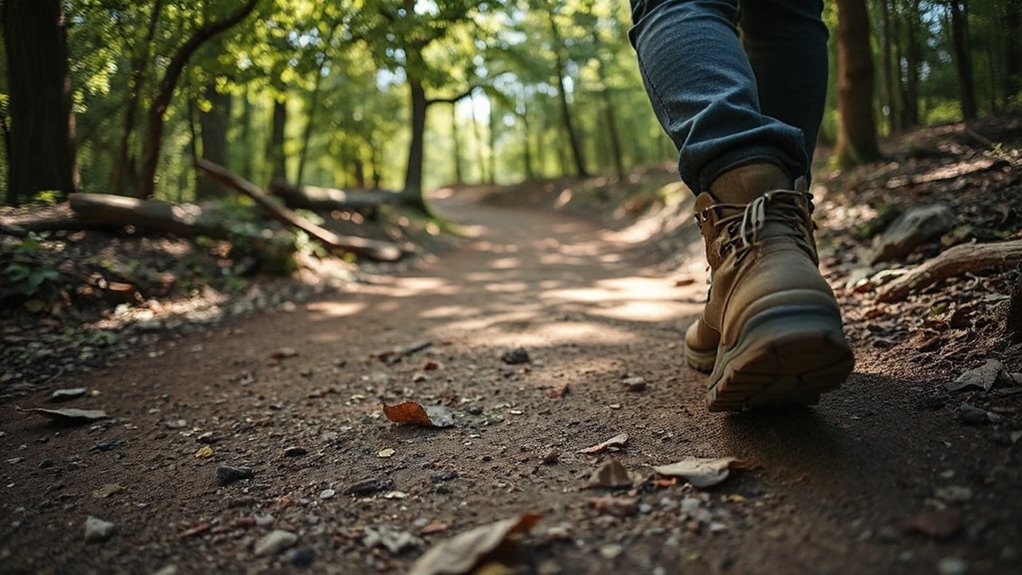
When an intractable problem refuses to yield despite days of concentrated effort, the solution may lie not in harder thinking but in forward movement. The ancient Latin phrase “solvitur ambulando”—it is solved by walking—captures a truth that modern problem-solvers continue to rediscover: physical movement can liberate mental breakthroughs that stationary contemplation cannot.
This phenomenon extends beyond anecdotal experience. A Caltech research team led by Omer Tamuz solved a notorious random walk mathematical problem in a single evening after struggling with it through traditional approaches. The breakthrough came when a student’s realization allowed them to unify different random walk types using algebra and geometry, demonstrating how shifting mental states can facilitate sudden insights. Many teams now combine walking with brief digital note capture to preserve breakthroughs that happen on the move, improving follow-through with automated reminders.
Walking fundamentally changes how the brain processes information. When thoughts wander freely during movement, they form connections that rigid focus prevents. The second day of multi-day walks particularly builds resilience, as evidenced by Werner Herzog‘s 515-mile winter journey from Munich to France, during which he reacquainted himself with landscapes and people.
Similarly, Meriwether Lewis made immeasurable scientific contributions during the Lewis and Clark expedition through detailed walking observations of flora and fauna.
The mechanism works partly through altered social dynamics. Side-by-side walking reduces the intensity of face-to-face conversation, allowing silence and presence to generate powerful insights. Coffee shop discussions often stagnate, while walking conversations flow with dynamic energy emerging literally from movement. Nilofer Merchant advocates for walking meetings to reduce the excessive sedentary time that now exceeds even our sleeping hours.
Historical figures understood this intuitively—Shams Al-Tabriz influenced Rumi through walking and presence, while Teddy Roosevelt rode through harsh weather to meet Navy fitness standards.
Henry David Thoreau required four hours of daily sauntering to maintain his spirits and health, free from worldly engagements. Erling Kagge credits walking with enabling a longer, better life. Jean-Jacques Rousseau claimed that meditation occurs only while walking, recognizing the unique mental state that ambulatory movement produces.
The solution is remarkably accessible: simply putting one foot in front of the other. For those facing stubborn problems after eleven days or eleven minutes, the answer may require nothing more sophisticated than stepping outside and letting the body lead where the mind cannot follow.
Related Posts