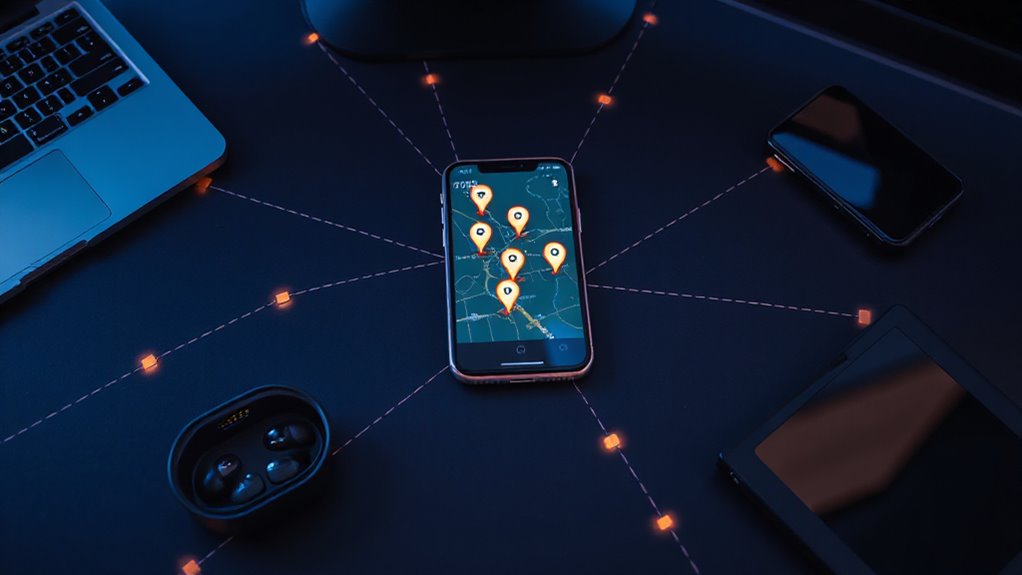
When Seconds Count: Real-Time Tracking for Dementia and Autism Patients
Within moments of a loved one wandering away from safety, families face a terrifying reality that demands immediate action. Real-time tracking devices provide critical solutions, delivering GPS updates every 30 seconds directly to caregivers’ smartphones.
These systems utilize cellular and satellite technology to pinpoint exact locations on Google Maps, regardless of distance. With 74% of dementia patients wandering by walking, driving, or public transportation, such precision proves essential.
Programs like L.A. Found have already credited these devices with safely locating 29 missing individuals with Alzheimer’s, autism, or cognitive impairments, transforming potential tragedies into swift recoveries. Investing in regular employee training on device use and safety protocols enhances reliability and response.
How Do GPS and RFID Tracking Devices Actually Locate People?
Behind every successful rescue of a wandering dementia patient or lost child lies sophisticated technology that transforms invisible satellite signals and radio waves into precise location data. GPS receivers triangulate positions using signals from at least four orbiting satellites, calculating distance based on transmission time to pinpoint locations within meters outdoors.
RFID systems deploy a different approach, utilizing wearable tags detected by strategically placed readers throughout facilities.
Key operational differences include:
- GPS devices locate missing persons 0.28 seconds per foot versus RFID’s 0.33-0.72 seconds
- Active RFID tags display second-by-second movement on building maps
- GPS weakens indoors where RFID excels with facility-wide reader networks
- UHF RFID achieves accuracy within feet when readers cover monitored spaces
Many organizations combine these approaches and integrate them into automated workflows to reduce errors and free staff for higher-value work, especially in document workflows that process location and identity data.
RFID vs. GPS vs. Bluetooth: Which Technology Fits Your Situation?
Choosing the right tracking technology requires matching specific capabilities to real-world conditions rather than defaulting to whichever option seems most advanced. GPS excels for vehicle tracking and outdoor monitoring across unlimited distances, though it consumes considerable power and fails indoors.
Bluetooth Low Energy offers versatile indoor-outdoor coverage within 100 meters, delivering real-time updates with battery life exceeding eighteen months.
RFID provides precise identification in controlled environments, with passive tags requiring zero power and active versions reaching beyond 100 meters. Evaluate your specific needs: outdoor range favors GPS, indoor environments suit Bluetooth, and close-proximity inventory management benefits from RFID‘s cost-effective scalability. Employers should also consider legal recordkeeping and payroll requirements when choosing a system, especially for accurate time tracking and audit trails.
What Happens After Someone Wanders: Average Response Times by Device Type
When a vulnerable individual wanders from safety, every second directly impacts the likelihood of a positive outcome, making response time the most critical performance metric for any tracking device.
Medical alert systems with monitoring centers deliver impressive results, with LifeFone averaging 22 seconds and Medical Guardian 29 seconds—well below the 60-second benchmark.
GPS devices excel over distance, closing each foot toward a missing person in 0.28 to 0.30 seconds, twice as efficiently as RF devices which require 0.33 to 0.72 seconds.
- A disoriented senior wandering into traffic at dusk
- A child with autism darting toward a busy intersection
- An Alzheimer’s patient confused in an unfamiliar parking lot
- A dementia wanderer entering woods during winter conditions
AI-driven solutions can further improve outcomes by automating alerts, surfacing relevant context, and creating real-time action items to speed follow-up.
Getting Consent: How to Talk to Loved Ones About Wearing a Tracker
Across dining room tables and living room couches throughout the country, adult children struggle with one of caregiving’s most delicate conversations: convincing a parent to wear a tracking device. Success requires timing these discussions during calm moments, using precise language that frames devices as independence enablers rather than control measures.
When parents resist, acknowledge their concerns about appearing disabled while normalizing the technology—compare it to everyday smartwatches, cite the three million older adults visiting emergency departments annually for falls, and offer hands-on trials. Healthcare providers can provide professional endorsements, particularly neurologists evaluating dementia symptoms and consent capacity. Persistent unrelieved stress can worsen cognitive and emotional symptoms, making these conversations harder and increasing the need for caregiver support.
Setting Up Your Tracking Device: Activation, Alerts, and Emergency Contacts
Successfully implementing a tracking device hinges on proper configuration, transforming the hardware from a passive gadget into an active safety network. Most systems require Bluetooth connectivity between the wearable and smartphone, with apps running in the background.
Proper setup transforms tracking devices from inactive hardware into comprehensive safety systems through careful configuration and smartphone integration.
Garmin devices send location and LiveTrack links to three designated contacts after detecting significant impacts during activities. COROS enables manual SOS activation through double-pressing the dial button, dispatching coordinates via email. Samsung and Android platforms allow emergency information display on lock screens, ensuring first responders access critical medical details when seconds matter. Many platforms also offer real-time tracking links that update automatically during activities for continuous monitoring.
- Designated contacts receiving automated alerts with precise GPS coordinates
- Emergency medical information visible on locked smartphone screens
- Real-time tracking links updating loved ones during outdoor activities
- Geofence notifications triggering when boundaries are crossed unexpectedly