








Creativity transforms time management by encouraging flexible, motivation-driven approaches over rigid scheduling systems. Creative individuals often discover their peak productivity periods and align important tasks with natural energy cycles rather than forcing work into conventional time slots. This intrinsic motivation leads to more effective prioritization, as people focus on projects that genuinely engage them. Creative time management also emphasizes protecting uninterrupted blocks for deep work while recognizing that inspiration doesn’t follow standard schedules. Understanding these principles reveals powerful strategies for optimizing both creative output and overall productivity.
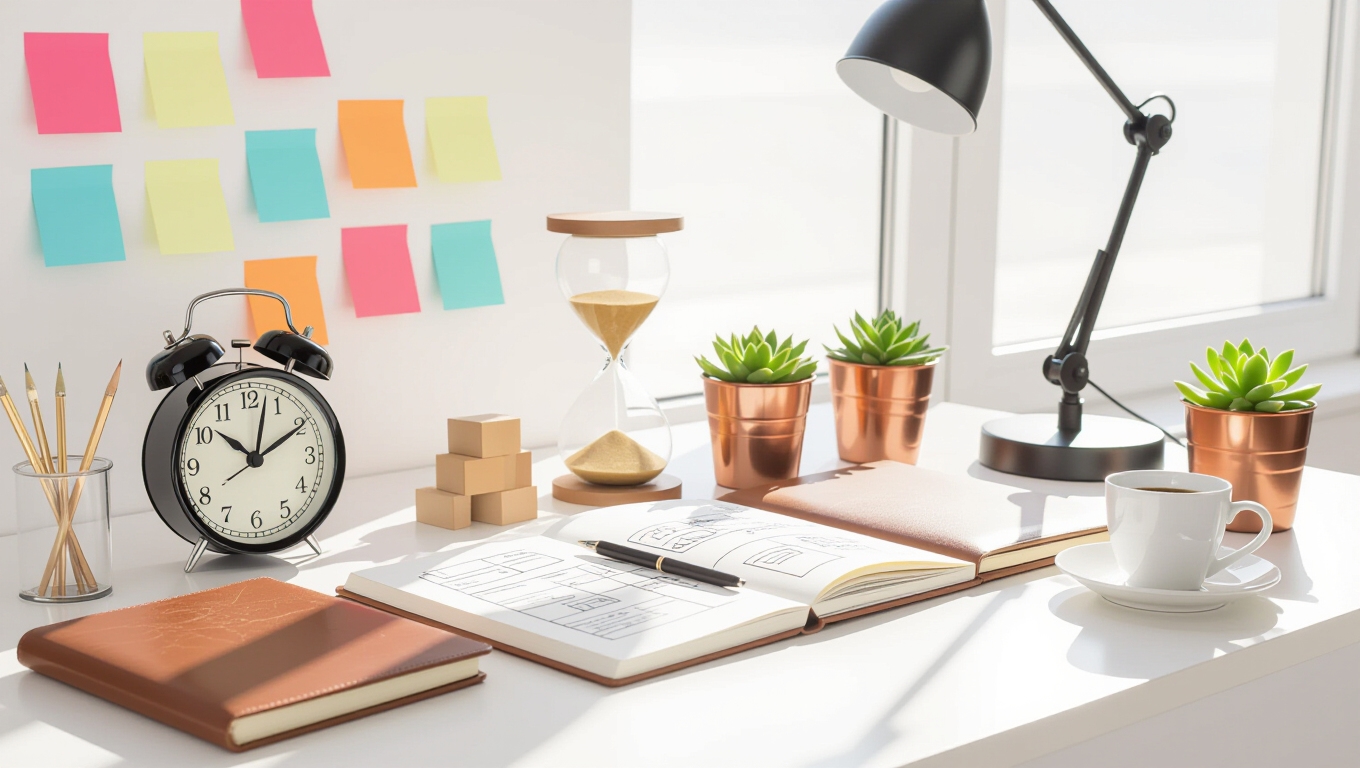
How can creative professionals maximize their output while managing the relentless demands of deadlines and daily responsibilities? The relationship between creativity and time management reveals surprising insights that challenge conventional wisdom about working under pressure.
Research demonstrates that high levels of time pressure generally reduce creativity, despite widespread belief that deadlines boost creative output. Expert evaluations consistently show that creative work suffers on days with the most time pressure. While people often report feeling more creative under tight deadlines, objective measures reveal diminished creative thinking. This disconnect suggests that the adrenaline rush of deadlines creates an illusion of enhanced creativity rather than genuine improvement.
The adrenaline rush of tight deadlines creates an illusion of enhanced creativity rather than genuine creative improvement.
The foundation of creative excellence lies in intrinsic motivation, which encompasses personal interest, enjoyment, and challenge. Creative work driven by external pressures or rewards produces markedly lower-quality output than work motivated by genuine engagement with the task itself. The Intrinsic Motivation Principle of Creativity confirms that people achieve their most innovative results when driven by passion for the work rather than external inducements. Studies on creative individuals in arts and writing demonstrate that external rewards consistently decrease creativity.
Managing distractions and interruptions becomes vital for maintaining creative flow. Frequent interruptions fragment creative work and reduce focus capacity, while anticipation of interruptions makes it difficult to achieve the relaxed state necessary for creative thinking. Ring-fencing dedicated time for creative work protects against these productivity killers and preserves mental clarity. Employing time-blocking strategies can help allocate specific periods for uninterrupted creative activity.
Strategic time management techniques can enhance creative output considerably. Separating brainstorming from execution allows for distinct creative phases, while breaking large projects into manageable pieces maintains motivation and provides regular progress indicators. Tracking time usage reveals patterns and identifies ideal creative periods for individual professionals. Recognizing tasks that take longer than anticipated helps creators set realistic expectations and avoid the frustration that comes with underestimating duration.
Timing plays a critical role in creative performance. Although ideal creative hours vary by individual, many professionals find afternoons most productive. Aligning work schedules with natural energy peaks and protecting these high-creativity periods becomes essential for consistent output.
When time pressure becomes unavoidable, minimizing distractions and providing clear mission focus can help preserve creative capacity. However, the most sustainable approach involves prioritizing mental clarity through proper planning, regular breaks, and realistic scheduling that allows subconscious processing and prevents burnout while maintaining creative excellence.
Frequently Asked Questions
Can Creative People Actually Be Good at Managing Their Time Effectively?
Creative individuals can indeed excel at time management when they adopt strategies that align with their natural workflows. Research indicates that flexible approaches like time blocking, themed days, and the Pomodoro Technique help creatives structure their schedules without stifling inspiration.
Success comes from prioritizing important but non-urgent tasks, protecting deep work periods, and regularly adjusting schedules to match personal creative rhythms and energy levels.
What Tools Help Creative Professionals Organize Their Schedules Without Stifling Inspiration?
Creative professionals benefit from visual project management tools like Trello and Asana, which offer drag-and-drop flexibility and intuitive organization without rigid constraints.
Time tracking apps such as Clockify help identify peak creative hours for strategic scheduling.
The Eisenhower Matrix enables effective task prioritization, while time blocking preserves focused work periods.
Integrated platforms like Notion combine note-taking with project planning, maintaining creative flow while ensuring structured productivity and deadline management.
How Do You Balance Structured Planning With Spontaneous Creative Bursts?
Creative professionals achieve ideal balance by establishing flexible frameworks rather than rigid schedules. They maintain designated creative blocks while preserving unstructured time for spontaneous inspiration.
Successful practitioners capture unexpected ideas immediately through digital tools or notebooks, then integrate them during planned sessions.
They schedule regular brainstorming periods and protect creative time from interruptions, allowing structured planning to support rather than constrain natural creative rhythms.
Does Time Blocking Kill Creativity or Enhance It for Artists?
Time blocking enhances creativity for artists when implemented thoughtfully. Structured creative blocks with flexible boundaries allow spontaneous inspiration within organized frameworks.
Artists benefit from separating brainstorming sessions from execution phases, ring-fencing peak creative hours, and incorporating free-form exploration periods.
Short, focused intervals prevent burnout while maintaining engagement. The key lies in balancing structure with adaptability, creating consistent routines that accommodate creativity’s unpredictable nature.
When Is the Best Time of Day for Creative Work?
The ideal time for creative work varies considerably among individuals, with research supporting both morning and nighttime productivity peaks. Morning hours benefit from reduced inner criticism and fewer distractions.
In contrast, evening periods may enhance creative connections through lowered inhibitions. Artists should experiment with different time slots to identify their personal creative peak, observing when their mind feels most open and focused for sustained artistic expression.
Related Posts