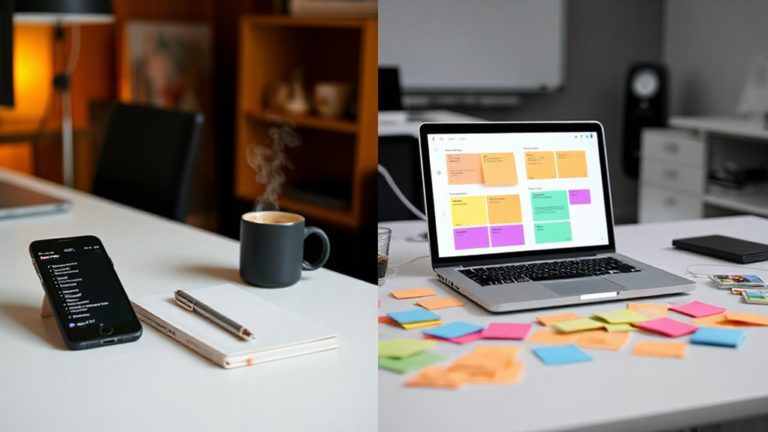







Why Organizing Systems Feel So Productive to Build
At the heart of any new organizing system lies a powerful and often misleading reward: the feeling that meaningful progress is already underway.
Building structure activates the brain’s anticipation circuits, delivering genuine satisfaction before any real work gets done.
Planning produces visible artifacts — folders, checklists, categories — that feel like accomplishments in themselves.
This response is not irrational.
Structure genuinely supports efficiency, which makes designing system feel like a high-value intervention.
The problem emerges when that feeling substitutes for execution.
Recognizing this distinction helps people channel their organizational instincts productively, treating system design as preparation rather than mistaking it for the work itself. The brain cannot distinguish between building a system and actually using one, because consuming and applying knowledge activate overlapping reward circuitry.
Organizations face the same trap at a larger scale, where elaborate planning rituals can displace actual output. Organizational learning is only meaningful when it becomes embedded in practice — documented in procedures and reflected in behavior — rather than remaining an artifact of the planning process itself.
Designing small, time-bound tasks and scheduling focused work blocks can prevent systems from becoming substitutes for action, since time-blocking enforces execution over endless planning.
Why the Maintenance Cost Eventually Outweighs the Benefit
The satisfaction of building a well-designed organizing system is real, but it carries a cost that rarely shows up in the initial planning.
Building an organizing system feels productive. What gets overlooked is the quiet, compounding cost of maintaining it.
Every category added, every tag created, and every folder structured becomes something that needs ongoing attention.
Sorting, labeling, and reviewing are not one-time tasks. They repeat.
As the system grows more detailed, the upkeep grows proportionally.
When maintenance time approaches the time the system was meant to save, the net benefit disappears.
The structure stops functioning as leverage and starts functioning as overhead, quietly demanding more than it returns.
Tracking PM compliance gaps reveals how missed routine tasks quietly accumulate into larger, costlier failures over time.
Healthy habits follow the same pattern — changes becoming routine only after more than six months of consistent effort, long past the point where the initial motivation has faded.
Automating parts of the workflow with cloud-based solutions can reduce some of that ongoing maintenance burden.
How Decision Fatigue Quietly Dismantles the Whole System
Even a well-designed organizing system can collapse under its own weight when decision fatigue enters the picture.
Each small choice the system demands quietly drains the same mental resources needed to sustain it.
Over time, those micro-decisions accumulate, and what once felt structured begins feeling burdensome.
The result is avoidance, inconsistent follow-through, and a growing distrust of the system itself.
Reducing this wear requires fewer active choices, not more discipline.
Building in defaults, automating low-value decisions, and limiting daily choice points gives the system a genuine chance of surviving contact with an already-depleted, real-world schedule.
Stress, perfectionism, and gaps in basic self-care can each quietly worsen this drain, meaning the system often isn’t the problem — the conditions surrounding it are.
Scheduling intentional downtime — moments that require no decisions or analysis — helps keep the mental reserves that sustain any organizing system from running dry.
Regular physical activity also protects mental reserves by lowering stress and improving focus through consistent exercise.
How Tool Switching Keeps Breaking the Cycle Before It Sticks
Fragmented tool environments quietly sabotage organizing systems before those systems ever get a real chance to work. Every unnecessary switch between apps forces the brain to reorient, consuming mental energy that could fuel actual progress. Maintaining a quiet, clutter-free workspace can help reduce reorientation and support sustained focus for these systems to take hold, especially when paired with consistent environmental controls like proper lighting and temperature distraction-free environment.
Research suggests workers toggle between applications roughly 1,200 times daily, losing nearly 10 minutes of productive momentum after each change. That accumulation destroys habit formation.
Routines solidify through low-friction repetition, but constant reorientation prevents any workflow from becoming automatic. Consolidating related steps into fewer tools reduces these interruptions considerably.
Fewer changes mean more consistency, and more consistency is precisely what allows an organizing system to finally take hold. On top of switching costs, workers lose nearly 59 minutes daily searching for information scattered across disconnected apps.
Studies show that 65% of switches are followed by another within less than eleven seconds, meaning the brain rarely gets even a brief window to settle before being pulled in a new direction again.
What It Actually Takes to Build a System That Survives Real Life
Building a system that survives real life requires more than good intentions and a fresh notebook. It demands low friction at the exact moment action is needed, not just in theory.
Cues must be consistent, routines must be repeatable, and rewards must be reliable enough to reinforce the loop. Maintenance burden should stay minimal, especially during busy periods when effort is scarce.
Behavior design matters more than willpower. Removing unnecessary steps before action begins dramatically improves follow-through.
Selective friction also plays a role, making desired behaviors easier while slowing harmful ones. Layering two or three small obstacles rather than relying on a single barrier prevents friction from becoming a habituated routine step.
Durability comes from fitting human limits, not overcoming them. Switching 401(k) enrollment to opt-out rather than opt-in pushed participation above 85%, demonstrating how structural access can outperform motivation alone.
Effective systems also account for how the brain filters distractions, using design to support prefrontal inhibitory control so attention holds when it matters.