Work-life balance has become one of the most important challenges in modern work environments. With remote work, constant connectivity, and increasing expectations, the boundaries between work and personal life are often blurred.
Many people feel overwhelmed, exhausted, or constantly “on,” even outside of working hours. This not only affects productivity but also long-term health, relationships, and overall wellbeing.
Achieving a healthy work-life balance is not about perfectly dividing time between work and life. It is about creating a sustainable way of working that allows you to perform well while still having time and energy for what matters outside of work.
On this page, you will find practical insights and perspectives to help you **reduce stress, improve your work habits, and build a healthier relationship between work and life**. Each section links to a deeper article where you can explore specific challenges and solutions in detail.
What Is Work-Life Balance?
Work-life balance means managing your time, energy, and priorities in a way that supports both your professional responsibilities and your personal life.
It involves:
- setting clear boundaries between work and personal time
- managing energy instead of just time
- reducing unnecessary stress
- creating space for recovery and personal activities
- aligning work with your values and lifestyle
The goal is not perfection, but sustainability and long-term wellbeing.
Why Work-Life Balance Often Fails
Many people struggle with work-life balance because of hidden patterns and unrealistic expectations.
Common causes include:
- working without clear boundaries
- trying to optimize every aspect of life
- poor communication in work or personal environments
- unrealistic productivity expectations
- inability to disconnect from work
Recognizing these patterns is the first step toward making meaningful changes.
Key Areas of Work-Life Balance
Below are the most important areas that influence your work-life balance.
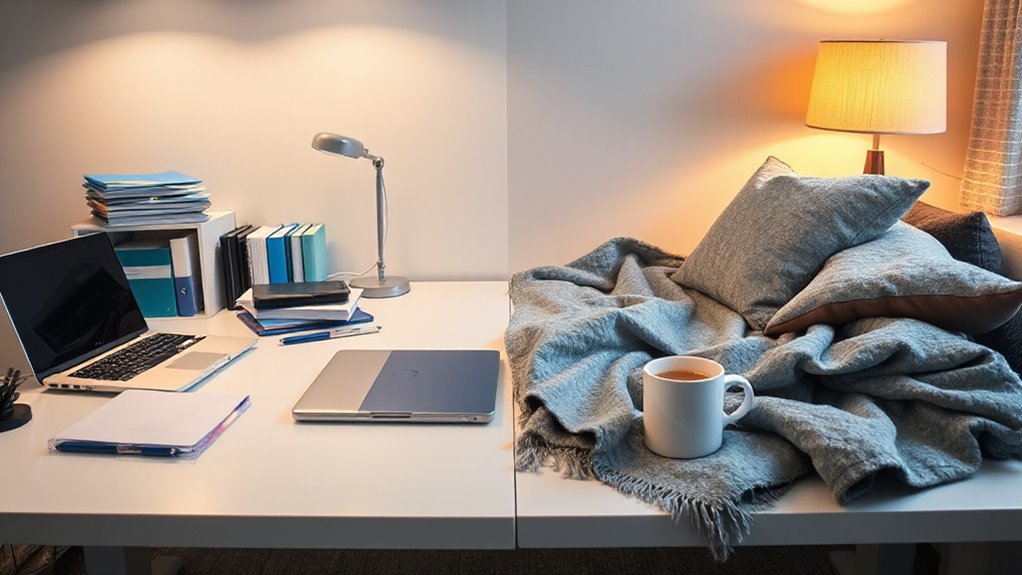
Create a Healthy Home Office Environment
Working from home can improve flexibility, but it can also blur the line between work and personal life.
👉 Make Your Home Office a Family Ally — Stop Letting Work Fracture Home Life
Understand Why Productivity at Home Feels Difficult
Many people struggle to stay productive at home, often for reasons that are not immediately obvious.
👉 Why You Can’t Be Productive at Home — And It’s Not What You Think
Recognize the Signs of Overwork
Exhaustion is often misunderstood as laziness, when it is actually a sign of imbalance and overwork.
👉 Why Your Exhaustion Isn’t Laziness—It’s a Sign You’re Overworking All Wrong
Improve Communication for Better Balance
Clear communication is essential for setting expectations and maintaining boundaries.
👉 Why Is Communication Important for Work-Life Balance?
Let Go of the Constant Optimization Mindset
Trying to optimize every part of your life can lead to stress instead of improvement.
👉 I Rejected the Relentless ‘Optimization’ Obsession
Practical Strategies to Improve Work-Life Balance
Improving your work-life balance does not require drastic changes. Small adjustments can already make a big difference.
Set clear boundaries
Define when your workday starts and ends, and stick to it as much as possible.
Manage your energy, not just your time
Pay attention to when you are most productive and schedule important tasks accordingly.
Take regular breaks
Short breaks help maintain focus and reduce mental fatigue.
Communicate expectations clearly
Let colleagues and family members know your availability and limits.
Create separation between work and personal life
Even small routines can help you mentally switch between work mode and personal time.
Recovery is not a luxury – it is essential for long-term productivity and wellbeing.
The Role of Recovery and Mental Space
Without proper recovery:
- focus decreases
- stress increases
- motivation drops
- performance suffers
Creating mental space allows you to recharge, think clearly, and return to work with more energy and focus.
Start Building a Better Work-Life Balance Today
Work-life balance is not about doing less work – it is about working in a way that supports your life, not consumes it.
By making small but intentional changes, you can:
- reduce stress
- improve your wellbeing
- increase your focus and performance
- create more time for what matters