Why Remote Work Drains You Even Without Overworking
Remote work carries a quiet burden that many professionals fail to recognize until exhaustion has already set in.
Without physical shifts like commuting or leaving an office, the brain never receives clear signals that work has ended. This absence keeps mental alertness running at a low but persistent level throughout the day. Implementing clear boundaries can recover lost hours and restore separation between work and personal time.
The brain needs clear signals that work has ended — without them, alertness quietly persists long past closing time.
Research confirms that “task residue,” where unfinished work thoughts linger into personal time, steadily depletes working memory.
Small, frequent demands from emails and chats compound this drain further.
The rapid shift to remote working after COVID-19 also increased the need for self-organisation and self-motivation, placing a significantly higher mental load on professionals already navigating disrupted routines.
Studies using the Job Demands-Resources model show that blurred work–personal boundaries under remote work create role ambiguity and prolonged alertness, steadily eroding psychological well-being over time.
Recognizing these hidden mechanisms is the first step toward reclaiming genuine recovery and protecting long-term professional performance.
Warning Signs Your Energy Is Already Running on Empty
Chronic energy depletion rarely announces itself all at once; instead, it builds quietly through signals that professionals often dismiss as normal fatigue or temporary stress. Persistent exhaustion that sleep never fully resolves is one telling indicator.
Mood shifts, including increased irritability, cynicism, or emotional withdrawal from colleagues and personal activities, signal deeper trouble. Mental health struggles can also reduce life satisfaction and resilience, affecting work and relationships life satisfaction.
Cognitively, routine tasks begin requiring disproportionate effort, while brain fog and frequent errors become common.
Physically, recurring headaches, body tension, and disrupted sleep compound the problem.
Behaviorally, relying on caffeine, skipping self-care, or working beyond designated hours confirms that energy reserves are critically low. When four or more signs persist for three weeks or longer, the pattern reflects burnout rather than an ordinary difficult stretch.
Research from Gallup estimates that three in four U.S. workers can expect to experience burnout at some point in their careers, making these warning signs far more than a personal concern.
Boundaries Remote Workers Need Around Time and Devices
Once the warning signs of energy depletion become recognizable, the logical next step is building structural defenses that keep work from consuming every available hour.
Remote professionals benefit from establishing fixed work hours, then broadcasting those hours through calendars, Slack profiles, and email signatures. Limiting notifications during nonwork hours preserves cognitive resources and reduces interruptions.
Set your hours. Post them everywhere. Let your calendar, Slack status, and email signature do the boundary-setting for you.
Designating device-free zones in bedrooms and dining areas reinforces psychological separation between work and rest.
Shutdown rituals, such as closing tabs, logging out, and writing tomorrow’s top three priorities, signal a clear daily ending.
Disabling non-essential notifications after hours and communicating realistic response-time expectations further protect recovery time from unnecessary digital interruption. Separators and integrators alike benefit from tailoring these boundaries to their personal style, since a one-size-fits-all approach to structure rarely accounts for how differently remote professionals experience the line between work and personal life.
Digital wellness is a practice, not a destination, meaning that small, consistent changes to how boundaries are maintained matter more than pursuing a perfectly optimized routine from the start.
Daily Habits Remote Workers Use to Rebuild Energy
Structural boundaries protect time and energy, but sustainable energy ultimately depends on the daily habits that restore what work depletes. Remote professionals who consistently rebuild energy treat recovery as a structured priority, not an afterthought.
- Morning rituals — Waking consistently, hydrating before coffee, and light movement signal the brain that focused work is beginning. Establishing a short morning routine also helps regulate sleep patterns and mood by reinforcing consistent wake times.
- Strategic micro-breaks — Moving 5–10 minutes every 1–2 hours measurably reduces sedentary fatigue. These brief activities release endorphins and help refocus the mind on body movement, lowering mental irritation and anxiety.
- Nutrition patterns — Protein-rich meals and timed caffeine prevent energy spikes and crashes. Keeping healthy snacks handy like nuts, fruits, and yogurt provides steady fuel throughout the day without relying on heavy meals.
- Mental resets — Brief breathing exercises between tasks lower cognitive switching costs to a notable extent. Slow, deep, controlled breathing halts the stress response and restores mental focus.
How to Build Sustainable Energy as a Remote Worker
Sustainable energy in a remote work context extends beyond personal habits—it also encompasses how thoughtfully a professional manages the physical and digital environment where work happens.
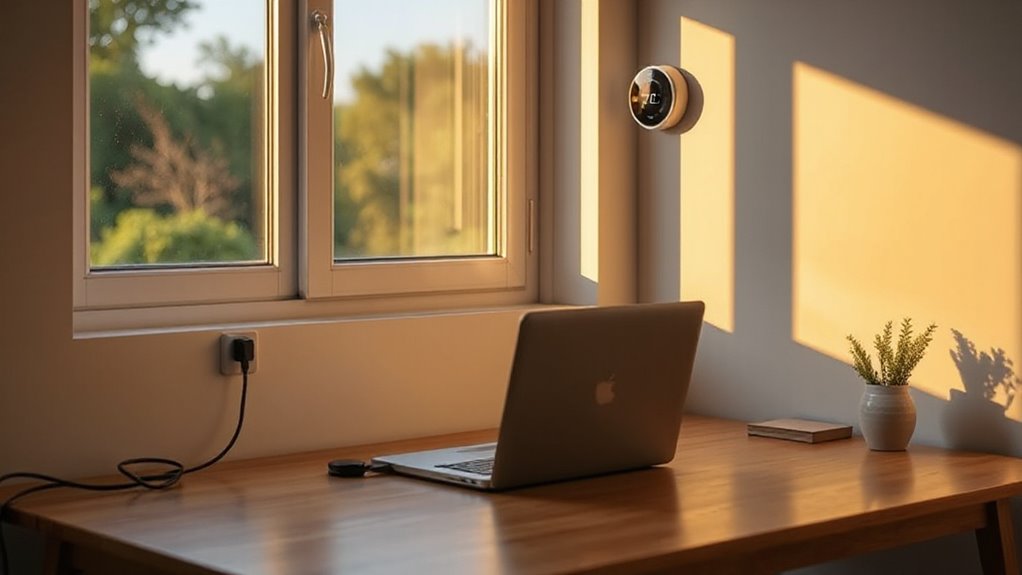
Positioning a workspace near natural light reduces dependence on artificial lighting, while LED fixtures cover darker hours efficiently.
Placing your desk near a window cuts artificial lighting needs; LEDs handle the rest when daylight fades.
ENERGY STAR-rated equipment and laptop computers draw less power than conventional alternatives.
Smart thermostats help regulate heating and cooling around actual work schedules, eliminating unnecessary consumption.
Enabling sleep mode after brief inactivity, using smart power strips, and unplugging devices at day’s end further reduce waste.
Small, consistent choices compound into genuinely sustainable professional energy over time. Reducing laptop screen brightness has been shown to cut monitor energy use by as much as 20 percent, a saving that scales significantly when applied across multiple devices.
Remote professionals who incorporate even a few days of home-based work each week may achieve a carbon footprint reduction of up to 29 percent compared to full-time onsite arrangements.
Centralizing and securing digital files in a cloud-based repository also lowers redundant energy use by preventing duplicate storage and enabling efficient access.