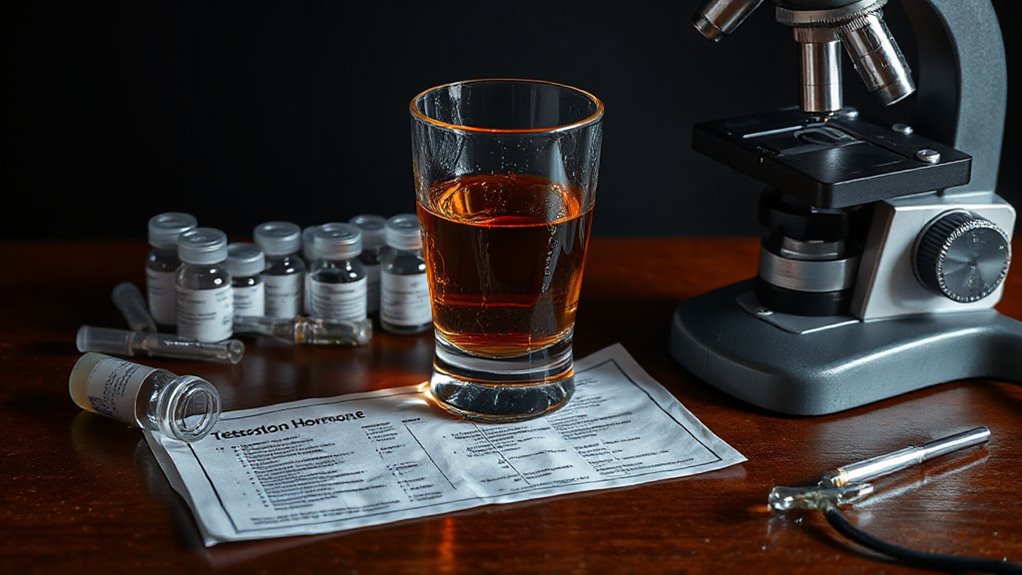
How Heavy Drinking Tanks Your Testosterone Levels
Heavy drinking does not merely impair judgment or damage the liver — it strikes at the hormonal core of male health by substantially reducing testosterone levels.
Research shows that chronic heavy alcohol consumption can lower total testosterone by an average of 4.86 nmol/L compared to abstainers.
Even a single binge of five or more drinks may suppress testosterone for up to 24 hours.
Over time, repeated exposure compounds these effects, increasing the risk of persistent hormonal suppression.
Recognizing this connection early gives men the opportunity to make informed choices that protect their long-term hormonal health and overall well-being. Alcohol disrupts testosterone production by interfering with the hypothalamus, pituitary gland, and testes, the three key glands responsible for regulating this hormone.
Low testosterone concentrations have been linked to increased risk of early mortality, highlighting the broader health consequences that extend well beyond hormonal imbalance alone. Chronic stress and elevated cortisol can further worsen hormonal disruption and compound the impact on testosterone.
How Alcohol Destroys Leydig Cells and Testicular Function
Alcohol functions as a direct toxin to Leydig cells, the specialized cells within the testes responsible for producing testosterone.
Research confirms that ethanol disrupts critical steroidogenic proteins, including StAR and PBR, which transport cholesterol into mitochondria for testosterone synthesis.
Ethanol directly disrupts StAR and PBR proteins, blocking the cholesterol transport essential for testosterone production.
It also reduces key enzymes like 3β-HSD, impairing androgen production at multiple steps.
Chronic heavy drinking shrinks testicular mass, damages Sertoli cells, and impairs sperm maturation.
Importantly, alcohol lowers LH receptor availability, weakening hormonal response capacity.
Alcohol-induced oxidative stress further compounds this damage by directly impairing Leydig cell function, reducing the liver’s ability to produce IGF1, which is essential for testosterone synthesis.
Understanding this cellular damage clarifies why addressing alcohol consumption directly protects testicular function, hormonal health, and long-term male fertility. Studies have found that testicular atrophy occurs in up to 75% of men with advanced alcoholic cirrhosis. A large portion of these outcomes relate to the global prevalence of untreated substance-related health issues and the broader impact on overall well-being.
Why Your LH and FSH Signals Break Down With Heavy Drinking
The damage alcohol inflicts on male hormonal health extends well beyond the testes themselves, reaching deep into the brain’s own signaling infrastructure.
Heavy drinking disrupts GnRH release, weakening the upstream signal driving both LH and FSH production. This disruption also promotes chronic inflammation that further impairs hormonal signaling pathways.
Without proper gonadotropin signaling, testosterone output collapses predictably.
- LH suppression directly reduces the pituitary message stimulating testicular testosterone production
- FSH disruption impairs Sertoli-cell support, undermining spermatogenesis at its foundation
- Altered feedback loops between testosterone, estradiol, and pituitary hormones compound the imbalance profoundly
Recognizing this cascade empowers men to understand that reducing alcohol consumption can meaningfully restore hormonal coordination over time. Heavy alcohol intake has been linked to altered sperm morphology in the majority of men consuming more than 80 grams of alcohol per day. In men, studies on assisted reproduction have also linked alcohol consumption with lower rates of children born and higher abortion rates.
What Heavy Drinking Does to Sperm Count and DNA Quality
Beyond its well-documented hormonal effects, chronic heavy drinking inflicts measurable damage on sperm itself — affecting count, shape, movement, and even the genetic material sperm carries.
Research shows that consuming as few as five drinks weekly begins reducing sperm concentration and the percentage of normally shaped sperm.
Above 25 units weekly, these declines become more pronounced.
Men exceeding 40 units weekly show sperm concentrations roughly 33% lower than light drinkers.
Alcohol also triggers oxidative stress, which compromises sperm DNA integrity — a factor directly linked to reduced fertilization potential.
Reducing alcohol intake remains one of the most actionable steps toward improving male reproductive health. Experts recommend cutting back at least 3 months before attempting to conceive or beginning assisted reproductive treatment to give sperm quality the best chance of recovery. A study of over 1,200 Danish men aged 18 to 28 confirmed these findings across multiple semen quality measures.
Structured assessments of stress responses can help identify resilience patterns that influence recovery and targeted interventions.
How Falling Testosterone From Alcohol Causes Erectile Dysfunction and Infertility
When testosterone levels drop significantly, the consequences extend well beyond mood or energy — they reach directly into erectile function and reproductive capacity.
Chronic alcohol consumption suppresses the hormonal signals that drive both erection quality and sperm production simultaneously.
- Alcohol-induced testosterone decline disrupts libido, arousal, and the neurological pathways supporting erections
- Sustained hormonal suppression weakens sperm production, reducing both quantity and viability
- Chronic heavy drinking ranks among the strongest non-vascular risk factors for erectile dysfunction
Recognizing these connections empowers men to make informed choices, since reducing alcohol intake meaningfully supports hormonal recovery and long-term reproductive health. Severe erectile dysfunction occurs three times more frequently among alcoholics than in non-alcoholics of comparable age. The hormonal disruption begins at the top of the cascade, where alcohol impairs the hypothalamus, anterior pituitary, and testes — the three glands governing testosterone synthesis. The brain’s top-down control of hormonal and reproductive function also suffers as alcohol disrupts prefrontal inhibitory mechanisms that help regulate these systems.
Related Posts