





Why Sleep Is Ronaldo’s First Line of Defense Against Fatigue
Among all the recovery strategies in Cristiano Ronaldo’s routine, sleep stands out as the most foundational.
Sleep is the most foundational recovery strategy in Cristiano Ronaldo’s routine, standing above all others.
Before any other method is considered, sleep serves as his primary defense against fatigue.
It is the only period when the body can genuinely repair muscle tissue, reset energy systems, and rebuild strength.
For Ronaldo, protecting sleep means protecting performance.
Speed, explosiveness, and match readiness all depend on consistent, quality rest.
Rather than treating sleep as passive downtime, his routine frames it as an active recovery tool, one that must be prioritized before any supplemental strategy is introduced.
His sleep schedule targets seven and a quarter hours on average, with bedtime around 11pm or midnight and wake time around 8:30am to 8:45am.
Ronaldo has described sleep as the most important tool he has for recovery and maintaining a healthy, controlled body.
Professional assessments show that monitoring physiological responses during rest can reveal resilience patterns that guide tailored recovery strategies.
The Training Structure Ronaldo Uses to Stay Match-Ready
Sleep alone cannot sustain elite performance without a training structure built to match its demands. Ronaldo organizes his day around two separate sessions, splitting pitch work from gym training to target different physical qualities without overloading the body at once.
Morning sessions focus on technical and tactical drills, while later sessions address strength, lower-body power, and core stability. Conditioning work, including short sprint intervals and cardio, preserves the stamina required for repeated match efforts. He also plans sessions with a clear training schedule to align workloads and recovery.
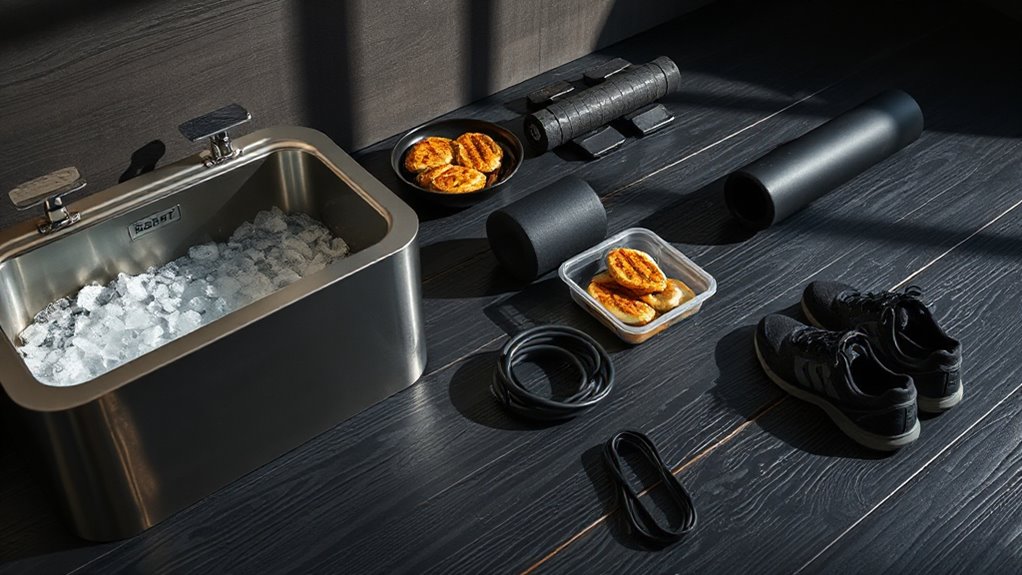
Recovery methods such as ice baths and massage are built between sessions, ensuring the body resets fully before the next training block begins. This carefully managed process supports adaptation without injury across the full training week.
The afternoon gym session, scheduled around 3:30 PM, aligns with the body’s naturally elevated core body temperature, when reaction time and muscle strength are at their daily peak.
How His Food Choices Fuel Double Training Sessions
Training twice a day places significant demands on the body, and Ronaldo’s diet is structured specifically to meet those demands without leaving energy gaps between sessions. His approach centers on four practical principles:
Training twice daily demands precision. Ronaldo’s diet is built around one goal: no energy gaps, ever.
- Frequent fueling — six small meals spaced every three to four hours maintain consistent energy.
- Lean protein priority — fish, chicken, and eggs support muscle repair between sessions.
- Quality carbohydrates — brown rice, sweet potatoes, and whole-wheat pasta deliver sustained training fuel.
- Eliminating empty calories — sugar, alcohol, and ultra-processed foods are excluded entirely.
Each choice directly supports performance rather than simply satisfying hunger. Ronaldo also prioritizes hydration throughout the day, consuming many cups of water to sustain physical output across back-to-back training sessions. His total daily intake reaches approximately 3,200 calories, carefully calibrated to fuel intense sessions without promoting unwanted fat storage. Adding structured nutrition like this also helps maintain recovery and reduces downtime, which supports overall employee productivity.
The Ice Baths, Massage, and Cold Therapy He Uses After Every Session
Fueling the body correctly is only half of what keeps Ronaldo performing at full intensity across two daily sessions. The recovery work that follows training matters just as much.
Since 2013, Ronaldo has used whole-body cryotherapy regularly, spending roughly three minutes inside a chamber reaching temperatures as low as -160°C. Cold-water immersion follows intense sessions to reduce inflammation and limit tissue breakdown. Regular physical activity also helps refocus the mind on body movements, reducing mental irritation and anxiety.
Daily massage supports this process further, improving blood flow and releasing accumulated muscle tension.
Together, these methods form a structured routine designed to restore readiness quickly, allowing him to return to high-intensity work sooner than most athletes realistically could. The physiological response to extreme cold has been shown to increase dopamine and serotonin levels, contributing to deeper and longer-lasting sleep patterns that further accelerate recovery.
Ronaldo also employs a sleep specialist and uses programmed naps throughout the day to accelerate muscle recovery, sharpen cognitive performance, and reduce accumulated fatigue between sessions.
The Long-Term System Behind Ronaldo’s Physical Sharpness at 40
What keeps Ronaldo physically sharp at 40 is not any single habit but the integration of every element into one coherent system. Each component reinforces the others, creating compounding results over time.
His system rests on four pillars:
- Structured training combining strength, sprints, and football-specific work
- Disciplined nutrition built around lean protein and consistent meal timing
- Prioritized sleep treated as essential performance infrastructure
- Active recovery through cold therapy, massage, and controlled rest
Together, these habits form a repeatable daily framework. His training reaches up to four hours per day, reflecting the demanding output required to stay competitive at the highest level. Skeletal muscle functions as a key metabolic organ, influencing blood sugar control, energy expenditure, and healthy ageing, which makes preserving it through structured resistance work a non-negotiable part of his routine.
Consistency, not intensity alone, explains his sustained sharpness across two decades of elite competition. Regular exercise also produces lasting neurochemical changes that support mood and cognitive resilience.